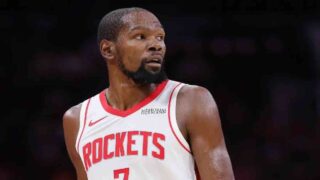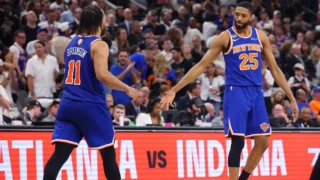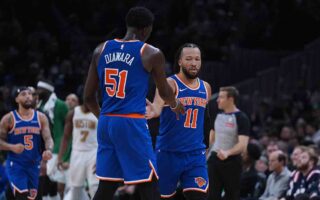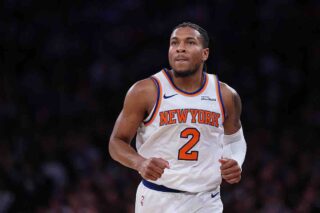

A hypothetical Knicks trade would send Miles McBride and Pacome Dadiet to the Clippers for Kris Dunn, adding defense but sacrificing youth and depth.
Miles McBride’s future with the New York Knicks has become increasingly uncertain as he enters the 2026-27 season on an expiring $3.9 million contract. New York did not reach an extension with the guard before the August 11 deadline, preserving the flexibility to move him before the February 5 trade deadline.
That decision does not guarantee McBride will be traded. It does, however, make him one of the Knicks’ most logical assets if the defending champions decide to adjust their rotation during the season.
One hypothetical proposal would send McBride and Pacome Dadiet to the Los Angeles Clippers in exchange for veteran guard Kris Dunn. The deal has not been reported as an actual negotiation, but it raises an intriguing question: would New York benefit from replacing its most reliable reserve with a more specialized perimeter defender?
Dunn Would Give the Knicks Another Elite Defensive Option
Dunn has built his NBA career around point-of-attack defense. At 6-foot-4, he possesses the size, physicality and instincts to pressure ball-handlers, disrupt passing lanes and defend multiple perimeter positions.
His offensive limitations have prevented him from becoming a complete starting guard. Dunn is a career 33% three-point shooter, which has allowed opponents to leave him open and direct additional attention toward more dangerous scorers.
His recent progress, however, makes the fit more interesting. After receiving regular starting opportunities from Clippers coach Tyronn Lue, Dunn converted 37.4% of his three-point attempts last season while making at least one triple per game. If that improvement proves sustainable, he becomes considerably easier to use in postseason lineups.
The Knicks would not need Dunn to handle a large offensive role. He could play approximately 15 to 20 minutes behind Jalen Brunson, take the most demanding defensive assignment and allow New York’s scorers to conserve energy.
A potential combination of Dunn, José Alvarado and OG Anunoby would give Mike Brown several aggressive defenders capable of applying pressure across the perimeter. Dunn could also share reserve minutes with Jordan Clarkson, Landry Shamet and Tyler Kolek, whose offensive abilities would help compensate for his limited shot creation.
His expiring $5.6 million salary would maintain New York’s future flexibility. The two-for-one structure would also reduce the Knicks to 12 guaranteed standard contracts, leaving additional roster space for a later signing or a potential buyout-market addition.
Trading McBride and Dadiet May Be Too Expensive
Although Dunn would strengthen New York’s perimeter defense, the proposed price creates legitimate concerns. McBride has been one of the Knicks’ most dependable bench players over the past three seasons, combining defensive intensity with improved perimeter shooting.
Unlike Dunn, McBride already understands the roster, the organization and the expectations that come with playing in New York. He has also produced in postseason situations, including while managing significant physical discomfort during the championship run.
McBride is younger, less expensive and potentially more valuable as a long-term piece. Even on an expiring contract, his combination of shooting, defense and affordability should generate interest around the league. Trading him for another expiring guard could amount to a short-term lateral move rather than a clear upgrade.
Including Dadiet makes the proposal even harder to justify. The young wing has not yet established a consistent role, but he still represents a developmental asset with size and upside. Moving both players for Dunn would require the Knicks to believe they no longer need McBride’s offense or Dadiet’s long-term potential.
Shamet’s postseason performances, Clarkson’s return and Kolek’s anticipated development give New York more backcourt depth than it possessed in previous seasons. That depth could make McBride expendable, especially if the front office is concerned about losing him without compensation in free agency.
Still, the Knicks should not trade him simply because an extension was not completed. Dunn’s defense would be valuable, but McBride offers a more balanced skill set and already fits the championship rotation.
The hypothetical deal would provide roster flexibility and another elite stopper, yet the cost appears steep unless the Clippers add draft compensation or another asset. New York should remain open to moving McBride, but only for a return that clearly improves its title defense rather than merely replacing one useful guard with another.