Connect with us

Rumors

Knicks Have a Hidden Development Decision: Manny Obaseki Could Be Westchester’s Next Long-Term Bet

Published

on

Manny Obaseki could return to Westchester for another developmental season as the Knicks evaluate whether the athletic young wing has long-term NBA potential.

The New York Knicks’ most important offseason decisions will naturally revolve around the NBA roster, but another layer of roster building is quietly taking shape in Westchester.

With the G League calendar beginning after the NBA season tips off, New York will soon have to decide which developmental players deserve another year inside the organization. One of the more intriguing names is Manny Obaseki, a 23-year-old wing who joined Westchester midway through last season and flashed enough athleticism and two-way potential to warrant a longer evaluation.

Obaseki is not currently an NBA rotation candidate, and his absence from the Knicks’ 2026 Summer League roster was notable. But that does not necessarily signal the end of his time with the organization.

For a franchise already carrying an expensive championship core, finding low-cost developmental talent matters. Westchester gives New York an opportunity to evaluate players such as Obaseki without sacrificing valuable NBA roster flexibility.

Obaseki Showed Enough in Westchester to Earn Another Look

Obaseki joined Westchester in January after beginning his professional career with Oklahoma City’s G League affiliate.

Across 21 games with the Knicks’ affiliate, he averaged 7.4 points, 3.0 rebounds and 1.5 assists while contributing 1.3 combined steals and blocks per game. He also shot 47.5% from the field and 47.6% from three, although the latter came on very limited perimeter volume.

Those numbers alone do not make him a high-end prospect.

The more interesting part of his season was how his production changed when he received a larger role.

Obaseki reached double figures 10 times and produced several performances that highlighted the versatility that once made him a highly regarded recruit. Against Wisconsin shortly after joining Westchester, he finished with 15 points, seven rebounds, six assists and three blocks, displaying the type of all-around impact that makes developmental staffs take notice.

Later in the season, he scored 16 points in only 21 minutes against Noblesville while shooting 6-of-9 from the floor.

His earlier G League stint also showed what could happen with heavier minutes. During an eight-game stretch that included six starts, Obaseki averaged 11.4 points, 6.8 rebounds and 3.8 assists in nearly 32 minutes per game.

That matters because Westchester’s rotation last season included established scorers and higher-profile developmental players, limiting Obaseki’s opportunities at times.

A full second season could provide a much cleaner evaluation.

Why the Knicks Should Keep Developing Obaseki Instead of Moving On

Obaseki’s most obvious NBA-level trait remains his athleticism.

At 6-foot-4 and roughly 200 pounds, he has the physical tools to defend multiple perimeter positions, play above the rim and create transition offense. Those are useful qualities in a league increasingly built around versatile wings.

The questions are much more technical.

Can he become a reliable three-point shooter on real volume? Can he make quick decisions without dominating the ball? Can his defensive athleticism translate into consistent positional discipline?

Those are exactly the types of questions the G League is designed to answer.

His 47.6% three-point percentage with Westchester looks impressive on paper, but the sample size is too small to draw meaningful conclusions. A season in which he takes three or four attempts per game would tell the Knicks far more about whether his shooting can become a genuine NBA skill.

The same applies defensively.

Obaseki has always possessed the tools to become an impact defender. What matters now is converting athleticism into repeatable habits — navigating screens, staying disciplined off the ball and defending without relying entirely on recovery speed.

That development would be particularly valuable to New York.

The Knicks do not need Obaseki to become a star. If he eventually develops into an inexpensive wing who can defend, run the floor and make open shots, that is already a useful outcome for a team operating near the top of the salary structure.

His Summer League omission does create uncertainty.

But it should not automatically be interpreted as a final verdict. New York may simply prefer to evaluate different players in that environment while keeping Obaseki’s G League rights or considering another Westchester opportunity when camps open.

That decision should become clearer around late October, when G League training camp rosters are finalized.

For now, Obaseki remains exactly the type of player worth monitoring: low cost, physically gifted and still young enough to improve.

The Knicks have already built a championship-level NBA roster. Their next challenge is finding inexpensive players who can eventually support it.

Obaseki may never reach that point.

But another season in Westchester could be the simplest way to find out.

AdvertisementAdvertisement

Rumors

Knicks Could Lose Nick Richards to Miami: Heat Reportedly Making a Strong Push for the Free-Agent Center

Published

on

Nick Richards is drawing considerable interest from the Miami Heat, potentially complicating the Knicks’ pursuit of the free-agent center as New York searches for more frontcourt depth.

The New York Knicks still have time to strengthen their frontcourt before training camp, but one of the more logical names on the market may not remain available for much longer.

Nick Richards has emerged as a serious target for the Miami Heat, according to Barry Jackson of the Miami Herald, who reported that the veteran center has drawn “considerable interest” from Miami while continuing to weigh multiple options.

For the Knicks, the timing is significant.

New York has already completed most of the major work required to keep its championship roster competitive. Jose Alvarado, Jordan Clarkson and Landry Shamet are back, while Andre Drummond was added to help replace some of the rebounding and interior size lost when Mitchell Robinson signed with the Boston Celtics. But the frontcourt still lacks proven depth beyond Karl-Anthony Towns and Drummond.

That is why Richards continues to make sense.

The 28-year-old has been linked to New York before, and recent speculation has again placed him among the centers the Knicks could consider as a late-offseason addition. Last season he averaged roughly nine points, seven rebounds and just under one block in 22 minutes, production that would fit neatly into a backup or third-center role.

Miami’s Interest Could Force the Knicks to Make a Decision

The challenge for New York is that Richards now has another attractive Eastern Conference option.

Miami is reportedly making a genuine push, although Richards is considering several possibilities and it remains unclear whether another team has offered more guaranteed money.

That detail could become decisive.

Neither the Knicks nor the Heat appear positioned to overwhelm Richards financially, meaning his eventual decision may depend as much on role, opportunity and competitive environment as salary.

New York can sell a straightforward basketball pitch.

The Knicks are defending NBA champions, have an established starting group and still need another dependable big capable of handling regular-season minutes. Richards would not be asked to carry a major offensive burden. He could focus on rebounding, rim protection, finishing around the basket and giving Towns or Drummond rest when needed.

Those responsibilities match his skill set.

Richards has already shown that he can be productive when his minutes increase, which is one reason he has remained on New York’s radar. Sportsnaut recently listed him among seven big men the Knicks could still pursue while noting that the team continues to seek additional frontcourt depth after Robinson’s departure.

Miami, however, can make its own compelling case.

The Heat offer a competitive environment, a strong defensive culture and a frontcourt built around Bam Adebayo and Giannis Antetokounmpo. If Miami can promise Richards a meaningful role, the decision becomes considerably more complicated for New York.

Richards Fits What the Knicks Still Need After Losing Robinson

The Knicks do not need Richards to replace Mitchell Robinson directly.

That would be an unrealistic expectation.

Robinson’s offensive rebounding, verticality and rim protection were unique parts of New York’s championship identity. Drummond has already been brought in to replace part of that physical presence.

Richards would instead add insurance and lineup flexibility.

At 6-foot-11, he gives New York another traditional center who can protect the paint and rebound without requiring touches. That becomes particularly valuable during a long regular season, when injuries, back-to-backs and matchup-specific situations can quickly expose a thin frontcourt.

The Knicks also have young players such as Pacome Dadiet and Mohamed Diawara whom they hope can take larger roles, but neither solves the need for another proven center. New York’s roster remains strong, yet a championship defense leaves little room for relying entirely on untested depth.

That is where Richards could become more valuable than his eventual contract suggests.

He does not need to average a double-double or play 25 minutes every night. If he gives the Knicks 15 reliable minutes when necessary, controls the glass and provides another body against bigger opponents, he could become an important piece across 82 games.

And unlike a trade target, signing Richards would not require New York to surrender draft capital or another rotation player.

That simplicity matters.

The Knicks have already shown this summer that they prefer moves that preserve flexibility while maintaining the core of the championship roster. Adding Richards at a manageable price would fit that approach perfectly.

The problem is that Miami appears ready to compete for the same player.

New York may therefore have to decide how aggressively it values a third center before the Heat or another team removes Richards from the market.

Richards is not the kind of signing that dominates an offseason. But for a contender trying to survive another deep playoff run, losing a useful big to an Eastern Conference rival could matter far more in April than it does in August.

Continue Reading

Rumors

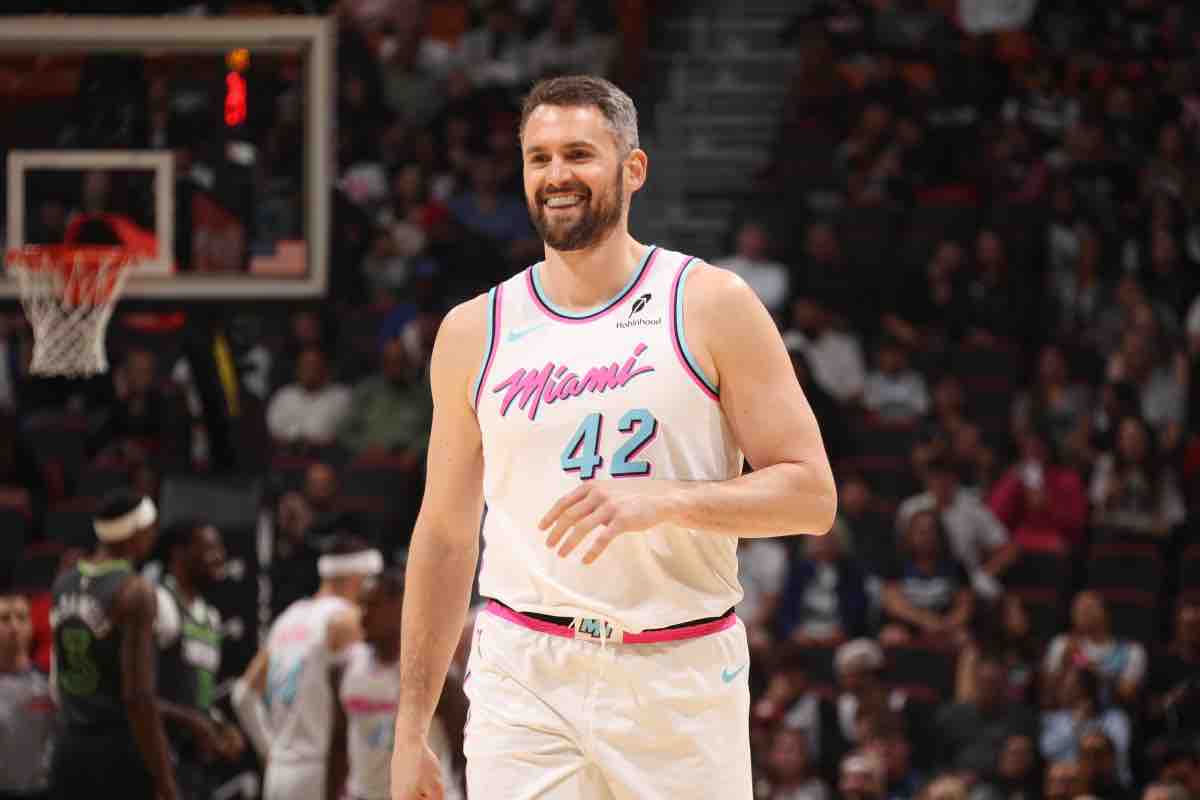
Knicks’ Surprise Solution? Why Kevin Love Could Replace Part of What Mitchell Robinson Gave New York

Published

on

Kevin Love remains a potential Knicks free-agent option. His rebounding, experience and floor-spacing ability could help New York replace part of what it lost with Mitchell Robinson.

The New York Knicks are not going to replace Mitchell Robinson with another Mitchell Robinson. His combination of offensive rebounding, physicality and interior defense was too specific to replicate with one inexpensive late-summer signing.

What New York can do, however, is replace parts of his impact in different ways.

That is what makes Kevin Love an intriguing veteran option for the defending champions. The five-time All-Star remains an unrestricted free agent after spending last season with the Utah Jazz, where he averaged 6.7 points and 5.8 rebounds per game.

At 37, Love is clearly no longer the All-NBA-level player who once averaged more than 20 points and 15 rebounds in Minnesota. His defensive limitations would also prevent him from filling Robinson’s role as a traditional rim protector.

But that does not mean he could not help the Knicks.

In a limited bench role, Love would offer New York something its current collection of big men does not necessarily provide: rebounding combined with legitimate shooting range from the frontcourt. For a team already featuring Karl-Anthony Towns, that flexibility could open some unusual lineup combinations for Mike Brown.

Kevin Love Would Replace Rebounding Differently Than Robinson

Robinson’s departure created an obvious question for New York.

Who replaces those extra possessions?

Robinson was one of the Knicks’ most valuable offensive rebounders, capable of extending possessions without needing plays called for him. Love would not reproduce that impact through athleticism or above-the-rim play, but rebounding has been one of the defining skills of his career.

Even with his minutes reduced last season, Love still averaged 5.8 rebounds per game, a respectable number considering his limited role.

His approach is also different from Robinson’s.

Love has always relied heavily on positioning, anticipation and physical box-outs. That becomes especially relevant as players age because it is a skill that does not depend entirely on explosiveness.

For the Knicks, he would not need to play 25 minutes every night. The value would come from being able to enter games for short stretches, stabilize the defensive glass and create additional possessions without requiring the ball offensively.

There would obviously be a trade-off.

Robinson gave New York vertical rim protection. Love does not. At this stage of his career, asking him to defend mobile centers or survive repeated pick-and-roll actions would create problems.

That makes the fit highly matchup-dependent.

But New York already has Towns and Andre Drummond available at center. Love would not need to become the primary backup five. Instead, he could function as another tactical option at both power forward and center.

Love’s Shooting Could Give Mike Brown Another Small-Ball Weapon

This is where the argument for Love becomes more interesting.

Unlike Robinson — and unlike Drummond — Love forces opposing defenses to respect him away from the basket.

That shooting ability completely changes the geometry of an offense.

New York could theoretically use Love as a stretch five in lineups built around Brunson and multiple perimeter creators, opening the paint and forcing opposing centers away from the rim. He could also play alongside another big as a floor-spacing power forward.

Even in limited minutes last season, Love continued to demonstrate that he remains willing and capable from deep. NBA.com’s game logs included flashes of that shooting ability, including a March performance in which he hit all three of his three-point attempts while adding eight rebounds in just 15 minutes.

That combination of shooting and rebounding has already made Love one of the veteran centers mentioned as a possible option for New York this offseason. A recent examination of remaining Knicks targets specifically included him among the free-agent big men still capable of filling a depth role.

The appeal is easy to understand.

The Knicks do not need another star. They need players who can solve specific problems without disrupting the established hierarchy.

Love understands that type of role.

He has already transitioned from franchise cornerstone to complementary veteran over the later stages of his career. Playing 10 or 15 minutes one night and potentially sitting the next would presumably be easier to manage with a player accustomed to changing responsibilities.

There is also the championship factor.

Love already owns a ring from Cleveland’s 2016 championship run. Joining the defending champions in New York would give him another opportunity to compete deep into the postseason while giving the Knicks another player familiar with the pressure surrounding a title defense.

The move would certainly carry risks. Love’s defense could be targeted in playoff matchups, and the Knicks would need to protect him with the right lineup combinations. He also cannot be viewed as a direct answer to New York’s need for rim protection.

But that may be the wrong way to evaluate him.

Kevin Love would not replace Mitchell Robinson. He could help replace some of the things the Knicks lost when Robinson left — while adding an offensive dimension Robinson never provided.

For the right price and the right role, that could make him one of the more interesting remaining free agents for a Knicks team looking for small upgrades rather than another major overhaul.

Continue Reading

Rumors

Knicks’ Missing Piece Still Available? Why Nick Richards Could Be the Perfect Final Move

Published

on

The Knicks could still target free-agent center Nick Richards. Here’s why his rebounding, size and rim protection could make him an ideal final addition to New York’s championship roster.

The New York Knicks may not need another headline-grabbing addition. What they still could use, however, is one more dependable big man — and Nick Richards remains one of the more intriguing options available on the free-agent market.

Richards’ name has been connected to New York at different points in recent years, and the fit makes even more sense now. The Knicks are coming off a championship season but have reshaped their center rotation following Mitchell Robinson’s departure. Andre Drummond has been added to play behind Karl-Anthony Towns, yet New York could still benefit from a younger, athletic third center capable of handling meaningful minutes when injuries or matchup issues arise.

That is where Richards could become interesting.

The 28-year-old is not a former All-Star — despite some descriptions circulating about him — but he has established himself as a productive rotation center during his NBA career. He has shown that with consistent playing time he can rebound at a high level, finish around the basket and provide a physical presence inside. Those are precisely the traits New York could use without dramatically changing the structure of its roster. Richards is currently a free agent after finishing last season with Chicago.

Nick Richards Could Give the Knicks Something Their Frontcourt Still Needs

The appeal of Richards is less about star power and more about roster construction.

At 6-foot-11, Richards gives teams legitimate size, rebounding and interior defense. He does not need offensive touches to influence games and can operate effectively as a screen-setter, rim runner and offensive rebounder. That makes him relatively easy to incorporate into a team already built around Jalen Brunson, Karl-Anthony Towns and several high-usage perimeter players.

His production declined last season, when he averaged roughly 5.8 points and 5.1 rebounds per game, but his previous body of work provides a better indication of what he can offer when given a consistent role.

Richards has previously demonstrated the ability to produce near double-double numbers when his minutes increase. He is not the kind of center who would require New York to redesign its offense. Instead, his value would come from doing many of the less glamorous jobs that become increasingly important over an 82-game schedule.

For a championship team, that matters.

New York already has Towns as its offensive centerpiece at center and Drummond as a veteran rebounder. Richards would provide a different combination of youth, mobility and rim protection while protecting the Knicks against injuries.

There is also some history behind New York’s interest. Richards has been mentioned as a possible Knicks target before, while recent reporting again identified him among the centers New York could consider in free agency.

A Low-Risk Move That Could Pay Off in the Playoffs

The larger question is whether Richards would accept the type of role and contract New York can realistically offer.

The Knicks have constructed their roster carefully around the NBA’s restrictive financial rules, making inexpensive depth increasingly valuable. After retaining several members of their championship rotation, New York does not have the flexibility to simply spend aggressively on another center.

Richards would therefore have to make sense at a manageable price.

From a basketball perspective, though, there is an argument that joining the defending champions could provide the ideal environment for him to rebuild his value after an uneven 2025-26 season.

He would not be asked to start every night. He would not need to score 15 points. And he would rarely have an offense running through him.

His responsibilities would be straightforward: rebound, protect the rim, set strong screens, finish around the basket and provide energy whenever his number is called.

That type of defined role can be especially valuable for a center whose production has fluctuated depending on playing time.

New York’s interest in another big also makes sense structurally. Recent reporting has indicated that the Knicks continue to explore options for a third center behind Towns and Drummond, potentially even through inexpensive or non-guaranteed additions.

Richards would represent something more proven.

He has already played meaningful NBA minutes and has shown that he can handle increased responsibility when necessary. Rather than gambling exclusively on an inexperienced developmental center, New York could add someone capable of stepping into the rotation immediately.

And although Richards is Jamaican-born rather than a New York native, he does have connections to the area from his high-school years in New York and New Jersey. He attended St. Mary’s in Manhasset before moving to The Patrick School in New Jersey, giving a potential move to the Knicks a degree of local familiarity.

For the Knicks, that is secondary to the basketball fit.

New York does not necessarily need Richards to become a 10-and-10 player every night. If he can provide 15 to 20 reliable minutes when necessary, control the glass and give Mike Brown another legitimate center to use depending on matchups, the signing could have substantial value.

The Knicks have already assembled the core they believe can defend their championship. The remaining moves are about margins.

Nick Richards could be exactly that type of move: inexpensive compared with a major acquisition, relatively low risk, but potentially extremely useful once the season — and especially the playoffs — begins.

Continue Reading

Tendenza

Copyright © 2017 Zox News Theme. Theme by MVP Themes, powered by WordPress.