Connect with us

Knicks News

Josh Hart’s Next Knicks Deal Could Get Expensive: Why $60 Million May No Longer Be Enough

Published

on

Josh Hart is eligible for a Knicks extension worth up to $132 million, but league projections range from roughly $60 million to $80 million over three years. Here’s why New York faces a difficult decision.

The New York Knicks know exactly what Josh Hart means to their championship formula. The harder question is determining how much that value should cost.

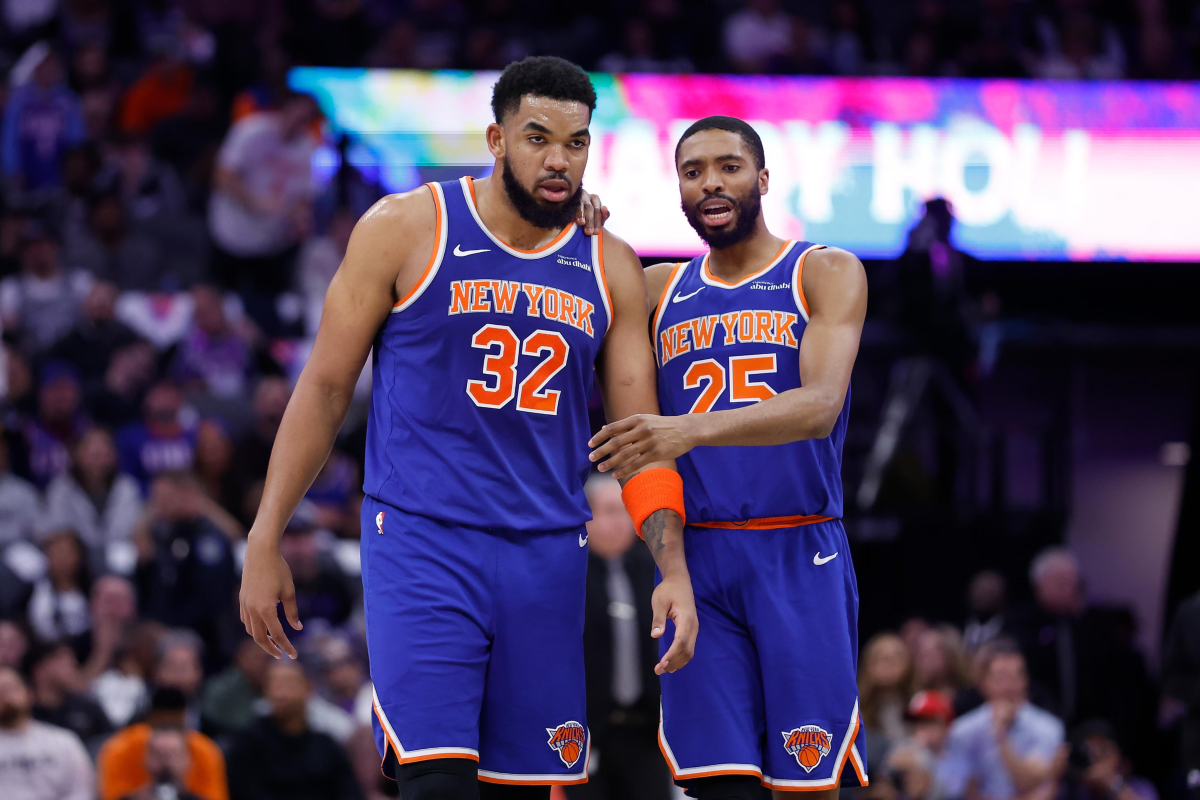
Hart became eligible for a new extension on August 10 and can technically sign for as much as four years and $132 million. Nobody around the league appears to expect New York to approach that ceiling, but the gap between what the Knicks would ideally pay and what Hart may actually be worth has suddenly become one of the most interesting financial questions surrounding the defending champions. 

Two league sources consulted by James L. Edwards III of The Athletic projected a potential compromise in the neighborhood of three years and $54 million to $62 million, with roughly $60 million to $62 million viewed as a possible sweet spot. Edwards, however, believes Hart’s actual market value could reasonably sit closer to $70 million to $80 million over three years

That difference matters.

Hart will earn about $20.9 million in 2026-27, while New York holds a team option worth approximately $22.4 million for 2027-28. The Knicks therefore have leverage and time. They do not need to rush into a deal simply because Hart has become extension-eligible. 

But waiting does not make Hart easier to replace.

Hart’s Value Has Outgrown the Traditional “Role Player” Label

The argument for paying Hart goes well beyond scoring.

During the 2025-26 regular season, the 31-year-old averaged 12.0 points, 7.4 rebounds, 4.8 assists and 1.1 steals in 30.2 minutes per game, while shooting 50.8% from the field and a career-best 41.3% from three. He then started all 19 playoff games during New York’s championship run, averaging 10.4 points, 8.9 rebounds, 4.6 assists and 1.7 steals. 

Those numbers help explain his importance, but they still do not completely capture it.

Hart is one of the rare players who can influence a game without needing an offense designed around him. He rebounds at an elite level for a 6-foot-5 wing, pushes the ball immediately after defensive rebounds, creates secondary offense, defends several positions and consistently generates possessions that do not appear in a traditional scoring column.

That makes him unusually difficult to price.

He is not an All-Star and does not carry the offensive responsibilities of Jalen Brunson or Karl-Anthony Towns. But removing Hart from the Knicks would force New York to replace several different skills rather than one specific role.

His improved perimeter shooting makes the calculation even more complicated.

When Hart was a reluctant shooter, opponents could occasionally use his defender as an extra help defender. Shooting 41.3% from three last season dramatically changed that equation. If that improvement proves sustainable, Hart becomes much easier to fit into almost any postseason lineup.

That is where comparable contracts become important.

Phoenix recently gave Dillon Brooks a three-year, $73 million extension, while Derrick White’s extension with Boston was worth up to roughly $126 million over four years. Neither comparison is perfect, but both reinforce the idea that high-level complementary players with playoff utility can command considerably more than $18 million or $20 million per season. 

From Hart’s perspective, asking why he should settle around $60 million is therefore reasonable.

The Second Apron Could Force the Knicks to Ask Hart for Another Discount

The problem for New York is not whether Hart deserves another contract.

It is how many expensive contracts one championship roster can carry.

The Knicks already have significant long-term commitments throughout their core, while Towns is also extension-eligible. New York has repeatedly prioritized staying below the second apron because crossing it introduces significant roster-building restrictions. Keeping this group together indefinitely at full market value will become increasingly difficult. 

That creates two very different versions of a Hart extension.

At three years and roughly $60 million, his salary would remain close to its current level. For the Knicks, that would be an extremely manageable outcome as the salary cap continues rising.

Move toward three years and $75 million, however, and the equation changes. Hart would still arguably be paid fairly relative to comparable players, but every additional $5 million matters when Brunson, Towns, OG Anunoby and Mikal Bridges already occupy substantial portions of the payroll.

This is where New York’s recent contract culture becomes relevant.

Brunson famously accepted less guaranteed money by extending early. Bridges also signed below his maximum. Hart previously worked with the Knicks on an extension structure that helped the franchise maintain flexibility.

That history may encourage New York to believe another compromise is possible.

But there is a limit to how frequently a franchise can expect core players to sacrifice market value.

Hart is entering his 10th NBA season and will turn 32 in March. This could realistically be the final significant long-term contract of his career. Expecting him to leave $15 million or $20 million on the table simply because other teammates previously accepted discounts is not necessarily reasonable.

That is what makes this negotiation so fascinating.

The Knicks have leverage because they already control Hart through this season and potentially 2027-28. Hart has leverage because his importance to the team is far greater than his scoring average suggests.

And both sides have powerful reasons to find common ground.

Hart has openly discussed how much he enjoys New York and has said finishing his career with the Knicks would be appealing. New York, meanwhile, just won a championship with Hart functioning as one of the emotional and tactical foundations of the roster. 

A deal still feels far more likely than a breakup.

The real question is the price.

If the Knicks can retain Hart for approximately $60 million over three years, it may eventually look like another team-friendly championship-core contract. If the number climbs toward $70 million or $80 million, New York will have to decide whether Hart’s unique impact is valuable enough to bend its carefully constructed financial plan.

For a player whose contribution has always been difficult to quantify, it is fitting that his next contract may be equally difficult to calculate.

AdvertisementAdvertisement

Knicks News

Knicks Made a Quiet $24 Million Bet — And Landry Shamet Already Proved Why It Matters

Published

on

The Knicks re-signed Landry Shamet to a four-year, $24 million deal after his elite playoff shooting. Here’s why his spacing could remain crucial to New York’s championship defense.

The New York Knicks did not need to overhaul a championship roster. They needed to identify which complementary pieces were worth keeping around Jalen Brunson and the rest of the core.

Landry Shamet made that decision easier.

New York brought him back on a four-year, $24 million contract after a postseason in which his shooting became one of the most dependable weapons in the second unit. Shamet connected on 47.5% of his 3-pointers in the playoffs, showing that his regular-season production was not simply empty shooting over an 82-game schedule.

He had already averaged 9.3 points per game, made two 3-pointers per night and shot 39.2% from deep during the regular season. Those numbers do not place him among the stars on the Knicks’ roster, but that is also what makes the deal so logical.

New York is not paying Shamet to run the offense. It is paying him to make the offense harder to defend.

Shamet gives the Knicks exactly what championship lineups need

Every contender needs players who can impact a possession without dominating it.

Shamet fits that description perfectly.

He moves well without the ball, relocates when defenders collapse toward Brunson or Karl-Anthony Towns and forces opponents to think twice before sending aggressive help toward New York’s primary creators.

That spacing matters even more in the playoffs.

Defenses become more disciplined, rotations become faster and every weak shooter can be turned into a target. A reliable perimeter option prevents opponents from shrinking the floor and gives the Knicks a simple response when their main scorers face double teams or crowded driving lanes.

Shamet proved he could handle those moments.

His 47.5% postseason shooting from three is obviously unlikely to remain that high forever, but the larger point is what happened when the pressure increased: he kept taking open shots and kept making enough of them to stay on the floor.

That reliability has enormous value.

The Knicks already have several players who need touches. Brunson controls the offense, Towns provides another major scoring option and players such as Mikal Bridges and OG Anunoby also need opportunities within the flow.

Shamet does not interfere with any of that.

He enhances it.

Put him next to a primary creator and his job remains straightforward: maintain spacing, move when the defense loses sight of him and punish unnecessary help.

For a championship team, simplicity can be a strength.

The $24 million deal is really about keeping New York’s formula intact

There will always be more glamorous contracts signed during an NBA offseason.

Shamet’s extension is not designed to generate headlines.

It is designed to preserve a rotation that already proved it could survive four playoff rounds and finish the job.

That distinction matters.

Championship teams often face pressure to keep adding bigger names after winning. But every major roster change introduces another variable: different roles, different chemistry and another player who must learn where his shots are coming from.

The Knicks already know how Shamet fits.

Mike Brown knows he can insert him when the offense needs additional spacing without reorganizing the entire lineup. Brunson knows where Shamet will be when defenses overload toward the ball. The rest of the rotation understands how his movement changes the geometry of the floor.

At an average value of roughly $6 million per season, New York is also not committing star-level money to a specialist.

The contract reflects his role.

That is one of the strongest arguments for the deal.

The Knicks are paying for a specific NBA skill — high-level shooting — and for evidence that the skill remains usable when games become more physical and possessions become more important.

There is still some risk.

Three-point percentages fluctuate, and Shamet will not shoot nearly 50% every postseason. If his shooting declines significantly, his limited creation ability becomes more noticeable.

But New York does not need perfection.

If Shamet remains somewhere near his regular-season level from three and continues to command defensive attention, the contract can provide excellent value throughout the life of the deal.

The Knicks already have their stars.

What they need around those stars are players who make lineups cleaner, possessions easier and playoff rotations more dependable.

Shamet did exactly that during the championship run. New York’s $24 million decision simply ensures that one of its most reliable floor-spacers will remain part of the formula.

Continue Reading

Knicks News

Knicks Have One More Reason to Watch Jose Alvarado Closely Before Training Camp

Published

on

Jose Alvarado will play for Puerto Rico in 2027 FIBA World Cup qualifiers before Knicks training camp, bringing both an opportunity and an injury concern for New York.

The New York Knicks will have another player competing in meaningful basketball before training camp, and this time there is a little more reason to pay attention.

Jose Alvarado has been named to Puerto Rico’s 12-man roster for the upcoming FIBA Basketball World Cup 2027 qualifying window, putting the Knicks guard back into international competition only a couple of months after helping New York win the NBA championship. Puerto Rico will visit Argentina on August 27 before traveling to face Uruguay on August 31. The national team is scheduled to assemble in Argentina on August 24.

From a basketball standpoint, there is plenty for the Knicks to like.

Alvarado will enter training camp having already played high-intensity games rather than relying exclusively on workouts and informal offseason runs. For a reserve guard whose game depends heavily on pressure, conditioning, pace and defensive aggression, meaningful competition could help him arrive in New York sharp.

But there is an obvious downside, too.

New York has just made a significant commitment to Alvarado, and his previous experience against Argentina provides an uncomfortable reminder that international basketball carries the same injury risks as NBA competition.

Argentina Brings Back an Uncomfortable Memory for Alvarado

The August 27 matchup will carry an unusual subplot.

Almost exactly one year earlier, Alvarado was playing for Puerto Rico against Argentina in the 2025 FIBA AmeriCupwhen he suffered a frightening fall during overtime while fighting for a rebound. He landed hard on his back and had to leave the court on a stretcher. Before the injury, he had scored 25 points as Puerto Rico pushed Argentina into overtime.

Fortunately, the incident did not result in the type of major long-term injury initially feared.

Still, from the Knicks’ perspective, seeing Alvarado return to a high-intensity international setting against the same opponent naturally creates some concern.

That does not mean New York should want him sitting at home.

International basketball matters enormously to Alvarado, and his style is almost impossible to separate from the competitive edge that has made him valuable throughout his NBA career. Asking him to reduce that intensity would be asking him to become a different player.

The key for the Knicks is simply getting him back healthy.

Puerto Rico is entering an important fourth qualifying window with Alvarado leading a roster that also includes Gian Clavell, George Conditt IV, Davon Reed, Alfonso Plummer, Isaiah Piñeiro and Ethan Thompson. FIBA lists Puerto Rico among the teams beginning Window 4 on August 27.

These will not be exhibition games played at half speed.

Puerto Rico enters this phase of qualifying at 2-4, increasing the stakes surrounding both road games.

For Alvarado, that means competitive basketball before the NBA calendar has even reached September.

For the Knicks, it means watching closely.

New York Just Invested in Alvarado for Its Title Defense

The reason this matters more now is simple: Alvarado is no longer merely an interesting reserve.

He has become part of New York’s championship infrastructure.

After acquiring the Brooklyn native from New Orleans during last season, the Knicks brought him back this summer on a three-year contract worth more than $14 million. Alvarado had declined a $4.5 million player option before reaching the new agreement, which New York officially announced in July.

His importance became particularly obvious during the NBA Finals.

Alvarado played alongside Jalen Brunson for much of the fourth quarter of New York’s historic Game 4 comeback against San Antonio, contributing eight points and three assists in the period as the Knicks erased a 29-point deficit.

That performance illustrated exactly why New York wanted him back.

Alvarado provides something different from the rest of the Knicks’ backcourt. He changes tempo defensively, pressures ball-handlers across the floor and can inject energy into games that have become stagnant.

For Mike Brown, having that type of player behind Brunson can become particularly valuable during the regular season, when managing workloads will be important for a team expecting another deep playoff run.

International competition could actually help accelerate that process.

Instead of arriving at camp having gone months without meaningful game action, Alvarado will have tested his conditioning and decision-making against experienced international opponents.

There is therefore a genuine upside.

The danger is simply that every additional competitive minute creates another opportunity for something to go wrong.

New York already knows that better than most after watching what happened to Alvarado during last year’s AmeriCup.

The Knicks cannot — and should not — control everything their players do away from the NBA. But they can certainly hope the next week gives Alvarado exactly what they want: competitive repetitions, improved rhythm and two healthy flights back from South America.

If that happens, Puerto Rico’s qualifying window could prove valuable preparation for New York’s title defense.

If anything goes wrong, however, the Knicks’ offseason suddenly becomes considerably more complicated.

Continue Reading

Knicks News

Knicks Can’t Ignore This Roster Flaw: New York Still Needs Another Center Before Its Title Defense

Published

on

The Knicks remain thin at center behind Karl-Anthony Towns and Andre Drummond. With Mitchell Robinson gone and limited room below the second apron, New York still needs another big before its title defense.

The New York Knicks are defending NBA champions, but that does not mean the roster is complete.

In fact, one weakness remains difficult to ignore: the center rotation behind Karl-Anthony Towns and Andre Drummond is still too thin for a team with championship expectations.

New York currently has 13 players on guaranteed standard contracts and sits roughly $3.27 million below the second apron, a number that helps explain why the front office has moved cautiously. The Knicks cannot simply hand out another expensive contract and worry about the consequences later.

But financial restraint does not eliminate the basketball problem.

Mitchell Robinson is gone, Ariel Hukporti is no longer part of the rotation, and the Knicks already tried to address the issue by signing Moussa Cisse to a two-year, $4.7 million offer sheet. Dallas quickly matched it, leaving New York searching again.

Drummond gives Mike Brown a legitimate veteran backup. He remains one of the league’s best rebounders and averaged 8.4 boards in only limited minutes last season.

The problem is what comes after him.

Towns and Drummond Are Not Enough for an 82-Game Season

Towns can obviously handle major responsibility.

He just helped lead New York to a championship and remains one of the league’s premier offensive centers. But asking him to absorb almost every important matchup against elite opposing big men over an 82-game season would be unnecessary risk.

Drummond was signed to provide size, rebounding and physicality behind him.

That is a sensible move.

What New York still lacks is another center capable of playing 10 to 15 dependable minutes when circumstances demand it.

That need becomes obvious when considering what the Knicks had last season. Robinson averaged 8.8 rebounds despite playing a limited role, while Hukporti gave New York another traditional center behind him.

That depth created options.

If Towns encountered foul trouble, New York did not immediately need to abandon size. If Robinson was unavailable, another center could absorb minutes. Mike Brown could change matchups without completely altering the structure of the lineup.

The current roster does not offer that same security.

Drummond is 33 and should not be expected to suddenly take on a dramatically larger workload simply because New York could not find another affordable big during the summer.

That is especially true during a title defense.

The Knicks will spend much of the regular season protecting their most important players for April, May and potentially June. Having another center is therefore not merely about replacing production. It is about avoiding unnecessary wear on Towns and Drummond.

One sprained ankle, early foul trouble or difficult back-to-back could expose the weakness immediately.

The Second Apron Makes the Search Harder — Not Less Important

New York’s patience is understandable.

The second apron has fundamentally changed roster construction around the NBA. The Knicks cannot add salary without considering how it affects future trades, flexibility and the ability to keep their championship core together.

That is exactly why the Cisse pursuit made so much sense.

He was young, athletic and inexpensive. In only 13.9 minutes per game last season, Cisse averaged 4.5 points, 5.7 rebounds and 1.2 blocks, making him the kind of developmental center who could have competed with Drummond for backup minutes without requiring a major financial commitment.

Dallas matching the offer did not make New York’s need disappear.

It only eliminated one solution.

The Knicks can now afford to be selective, particularly because training camp will create additional opportunities. Players will be waived, younger big men could become available in trades, and veterans currently seeking larger roles may eventually become willing to accept smaller contracts.

There is nothing wrong with waiting for the right opportunity.

But there is a difference between patience and complacency.

New York should not enter the regular season assuming that Towns and Drummond can cover every center minute and that small-ball options will solve everything else.

The Knicks won the championship with size, rebounding and multiple frontcourt combinations. Removing that versatility would make the title defense unnecessarily difficult.

The ideal addition does not need to be a starter.

He does not even need to become the permanent backup.

New York simply needs another playable big — someone who can protect the rim, rebound, survive physically against traditional centers and prevent Brown from having to redesign his rotation every time Towns sits.

That player could arrive through free agency, a minimum contract, a camp cut or a minor trade.

But he should arrive.

Because defending a championship is already difficult enough without deliberately entering the season one injury away from a frontcourt problem.

The Knicks have earned the right to trust their championship core. They have not earned the luxury of ignoring the roster’s most obvious remaining weakness. Before opening night, New York still needs another center.

Continue Reading

Tendenza

Copyright © 2017 Zox News Theme. Theme by MVP Themes, powered by WordPress.