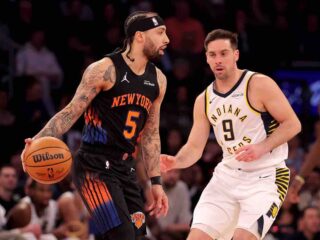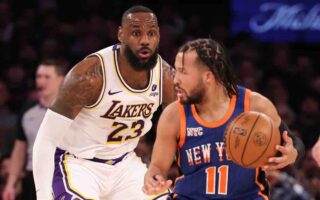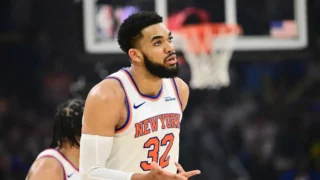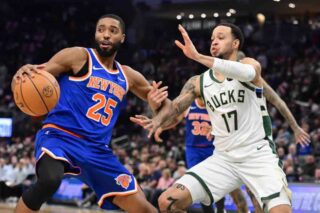
The Knicks Lost Their Defensive Safety Net—Can Andre Drummond Really Replace Mitchell Robinson?
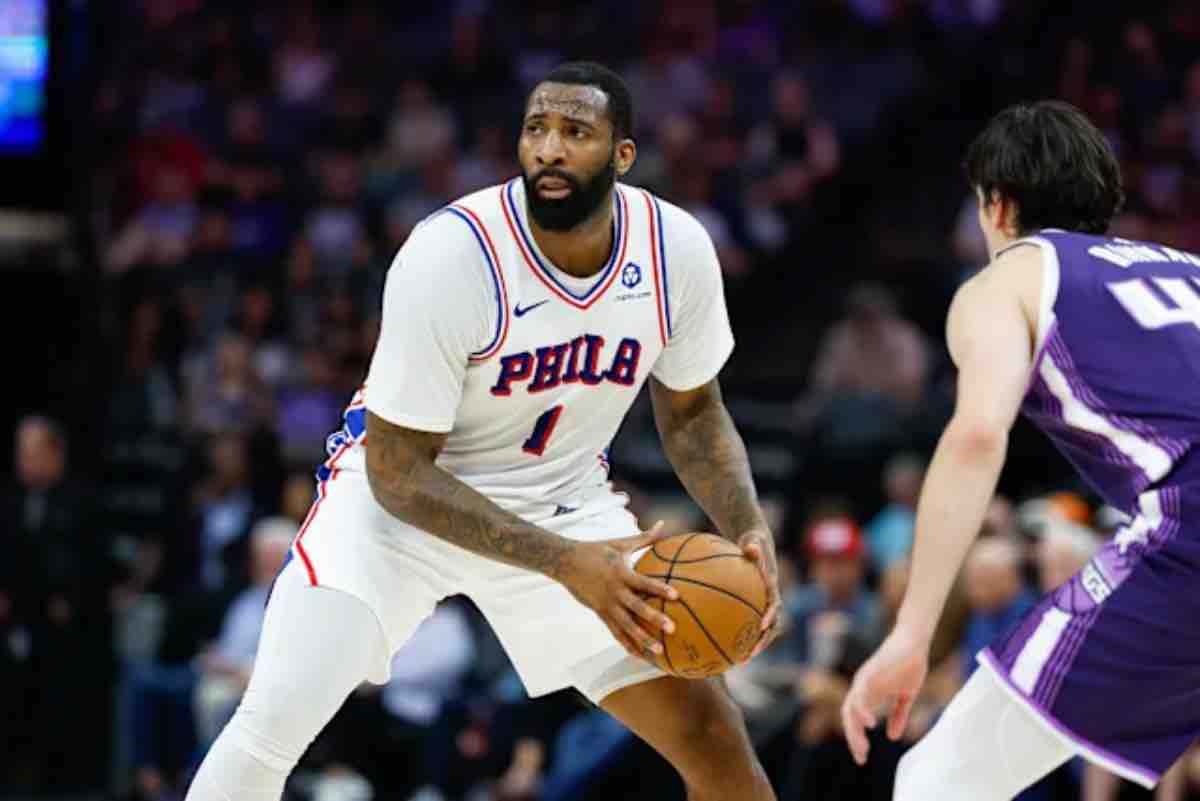
Andre Drummond replaces Mitchell Robinson, but questions remain about the Knicks’ rim protection and center depth entering their title defense.
The New York Knicks preserved almost every important component of their championship roster, but their most significant offseason change occurred at center. Mitchell Robinson left for the Boston Celtics, while Andre Drummond arrived on a one-year contract to become Karl-Anthony Towns’ primary backup.
On paper, the transition appears logical. Drummond is an experienced, physical rebounder who can provide productive minutes without demanding a major offensive role. The reality is more complicated. Robinson’s influence extended beyond the traditional statistics, and New York may discover that replacing his specific defensive impact requires more than signing another powerful center.
The debate surrounding the Knicks’ center depth in 2026-27 could ultimately determine whether their title defense has the necessary balance.
Drummond Replaces the Rebounding, Not the Defensive Versatility
Drummond remains one of the most accomplished rebounders of his generation. During his final season with Philadelphia, he averaged 6.4 points and 8.4 rebounds despite playing a limited role. He also started 25 games, providing evidence that he can handle additional responsibility when the primary center is unavailable.
His rebounding should translate immediately. Drummond creates second-chance opportunities, controls the defensive glass and gives New York a physical presence behind Towns. He is particularly valuable during the regular season, when the Knicks need to protect their starters from an excessive workload.
The veteran also brings durability. Robinson’s availability was often unpredictable because of injuries, forcing New York to repeatedly adjust its rotation. Drummond played 63 games last season and has appeared in 967 regular-season contests during his career. His experience should provide Mike Brown with a dependable option during difficult stretches of the schedule.
New York officially identified Drummond as its principal offseason addition after Robinson joined Boston. The NBA’s transaction tracker confirmed both moves, creating a direct comparison between the two centers.
They are not, however, identical players. Robinson offered vertical explosiveness, offensive rebounding and genuine rim protection. His ability to challenge shots allowed New York’s perimeter defenders to apply greater pressure because they knew an elite shot blocker was positioned behind them.
Drummond is heavier and less mobile. He can defend traditional centers, occupy space and secure rebounds, but asking him to contain guards after switches would create problems. Opponents may force him into high pick-and-roll actions, attempting to generate open pull-up shots or drive before he can recover.
His arrival also changes the possibilities of the double-center lineup. Towns and Robinson could compensate for one another: Towns supplied shooting and offensive creation, while Robinson protected the rim. A Towns-Drummond partnership would retain size and rebounding but could struggle against teams that attack with speed and five-out spacing.
Drummond has occasionally attempted corner 3-pointers, yet opposing defenses are unlikely to guard him away from the basket consistently. Using both centers together may therefore reduce the driving lanes available to Jalen Brunson.
New York Still Needs One More Center
The larger concern is not whether Drummond can contribute. It is whether the Knicks are asking him to solve too many different problems.
Towns and Drummond are currently New York’s only established traditional centers following the departures of Robinson and Ariel Hukporti. That structure leaves the champions vulnerable if either player misses time. Towns’ health becomes especially important because he is both the starting center and one of the team’s primary offensive creators.
The NBA’s offseason Eastern Conference rankings placed New York first but highlighted Robinson’s defensive departure and the increased importance of Towns’ availability, rebounding and defense.
Adding an athletic third center would give Mike Brown additional protection. The ideal player would not need offensive touches or a large role. New York requires a low-cost big man capable of blocking shots, running the floor, defending pick-and-rolls and accepting irregular minutes.
The Knicks attempted to add Moussa Cissé, but Dallas matched their offer sheet. Nick Richards also appeared to be an affordable possibility before Miami gained the advantage in negotiations. With the available market becoming thinner, New York may need to wait for preseason roster cuts or explore a smaller trade later in the campaign.
Until another center arrives, Brown could experiment with small-ball units featuring OG Anunoby in the middle. Those lineups would increase switching and create additional offensive space, particularly when Towns rests. Anunoby’s strength allows him to defend many larger players for short periods.
That approach cannot become the permanent answer. Asking Anunoby to battle Joel Embiid, Giannis Antetokounmpo, Bam Adebayo or Victor Wembanyama would create unnecessary physical wear and could remove New York’s best perimeter defender from his natural assignment.
Drummond does not need to become Robinson to justify his signing. If he rebounds, screens effectively and survives defensively for 15 to 20 minutes per game, his contract will represent excellent value. The danger comes from expecting him to reproduce every element Robinson supplied during the championship run.
New York retained its stars, experience and offensive identity. What it lost was the defensive safety net that covered mistakes around the basket. Drummond can repair part of that damage, but the Knicks may still be one athletic center away from completing a roster capable of defending its title.