Jalen Brunson Better Than SGA? Max Kellerman Ignites a Massive NBA Debate After Knicks Title Run
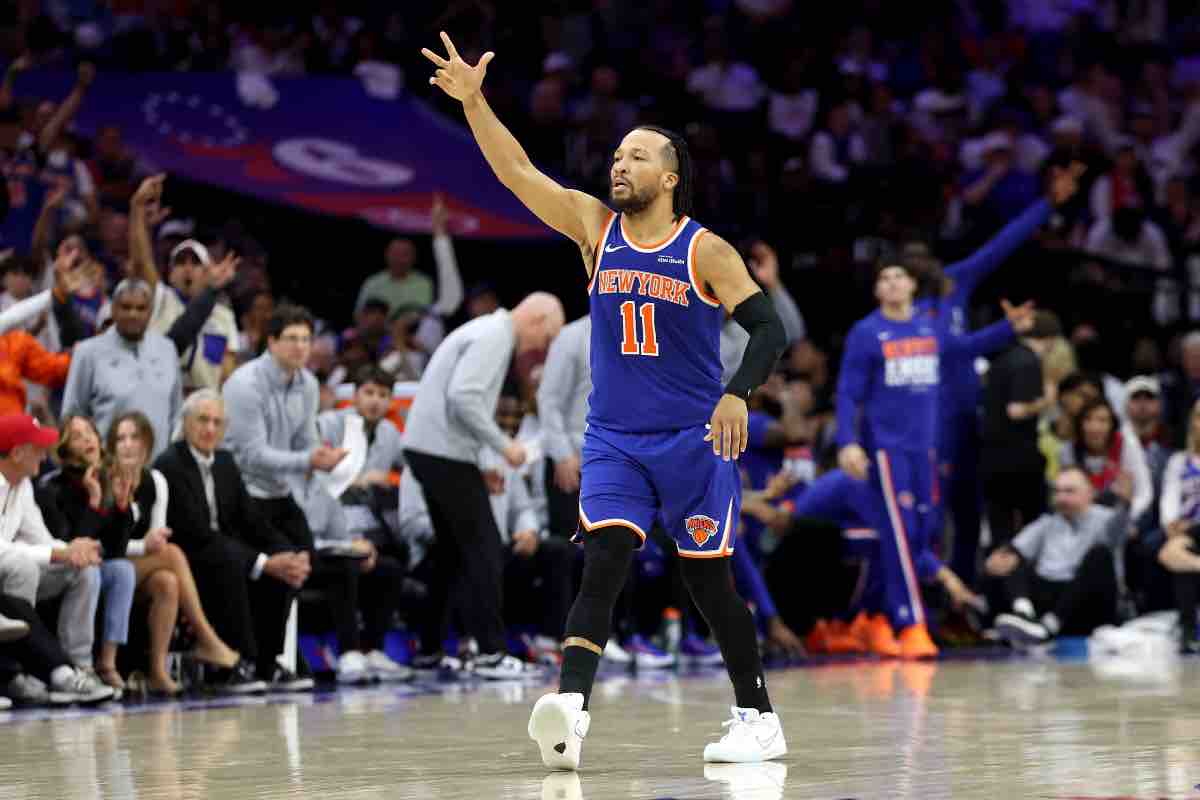
Max Kellerman sparked a huge NBA debate by arguing Jalen Brunson is more valuable than Shai Gilgeous-Alexander after leading the Knicks to the 2026 championship.
Jalen Brunson’s championship run has completely changed the way the basketball world talks about him.
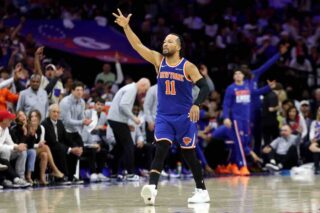
For years, Brunson was viewed as an excellent scorer, an elite competitor and one of the NBA’s best success stories. After leading the New York Knicks to their first championship in 53 years and finishing the Finals with a 45-point masterpiece in the deciding Game 5, that conversation has moved into a very different territory.
Brunson is no longer being discussed simply as a star.
He is now being compared with the very best players in basketball.
That is exactly what happened when Max Kellerman offered one of the boldest takes of the offseason, arguing that Brunson may actually be more valuable than Shai Gilgeous-Alexander, the back-to-back NBA MVP.
It is the kind of comparison that would have sounded almost impossible a few years ago. After Brunson’s postseason, however, it is at least a debate the basketball world is willing to have.
Kellerman Uses the Spurs as His Case for Brunson Over SGA
Kellerman’s argument centered on one specific comparison.
Both Brunson and Gilgeous-Alexander faced the San Antonio Spurs during the playoffs. According to Kellerman, San Antonio used similar defensive concepts in an attempt to disrupt both guards, but the results were dramatically different.
Gilgeous-Alexander and his team were eliminated.
Brunson, meanwhile, eventually solved the problem and helped New York continue its historic postseason run.
For Kellerman, that ability to adjust is what separates the two.
His point was not simply that Brunson had a better series or that New York happened to advance. The argument went deeper: when both superstars were confronted with similar defensive pressure, Brunson found ways to change his approach and continue producing at a championship level.
That distinction matters in playoff basketball.
Regular-season dominance is one thing. Seven-game series are built around adjustments, repeated possessions and opponents specifically designing entire defensive schemes around a star player’s weaknesses.
Brunson experienced that throughout New York’s title run.
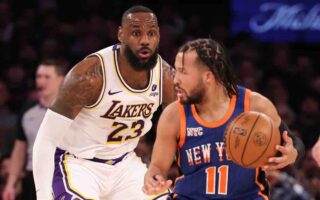
Teams trapped him, switched bigger defenders onto him, attempted to take away his preferred spots and forced the ball out of his hands. His response was rarely the same from one game to the next.
Sometimes he attacked as a scorer. Other nights he manipulated the defense and became more of a facilitator. When opponents overloaded one side of the floor, Brunson trusted teammates and repositioned himself off the ball.
That versatility became one of the defining characteristics of his postseason.
Still, using one playoff opponent as definitive proof that Brunson is better than Gilgeous-Alexander is naturally going to create controversy.
SGA has the individual résumé, consecutive MVP awards and sustained regular-season production that make any comparison difficult. Kellerman’s argument is therefore less about accomplishments and more about one central question: who would you trust more when a playoff defense has seven games to figure everything out?
After 2026, Brunson has given his supporters a powerful answer.
The Knicks Championship Has Changed Brunson’s Place in the NBA Hierarchy
The larger story is not whether Kellerman is unquestionably correct.
It is that a Brunson-versus-SGA debate can now happen without sounding ridiculous.
That alone demonstrates how dramatically Brunson’s reputation has evolved.
His offseason has looked like a celebration of what he accomplished. He has appeared at major events across New York, visited Rucker Park and become one of the city’s most recognizable sports figures. The Finals MVP trophy only amplified a connection with Knicks fans that had already become unusually strong.
But the championship also changed his national standing.
Brunson is now judged against MVPs and perennial All-NBA superstars rather than simply against other point guards.
That comes with greater praise but also greater scrutiny.
Gilgeous-Alexander remains one of the most gifted offensive players in basketball, with elite size for his position, remarkable efficiency and a style that consistently produces huge numbers. Brunson operates differently. He wins through footwork, strength, change of pace, shot creation and an extraordinary ability to control pick-and-roll possessions.
Their games are different enough that the comparison cannot be reduced to a single statistical category.
What Brunson now owns, however, is the ultimate piece of evidence in superstar debates: a championship run in which he was unquestionably the central figure.
He did not simply participate in New York’s breakthrough. He defined it.
The 45 points in the championship-clinching game became the exclamation point, but Brunson’s real case was built across the entire postseason. Possession after possession, series after series, New York trusted him to solve whatever problem was placed in front of the team.
That is why comments like Kellerman’s will continue.
The NBA loves rankings, particularly after championships, and Brunson has forced his way into conversations that once belonged almost exclusively to players with MVP trophies.
Whether he has actually surpassed Gilgeous-Alexander is subjective.
But something more important has already happened.
Jalen Brunson has reached the point where claiming he is one of the most valuable players in basketball is no longer a hot take by itself.
Now the argument is about exactly how high he belongs.