The Knicks Just Won a Title—Now a $272 Million KAT Decision Could Shape Their Future
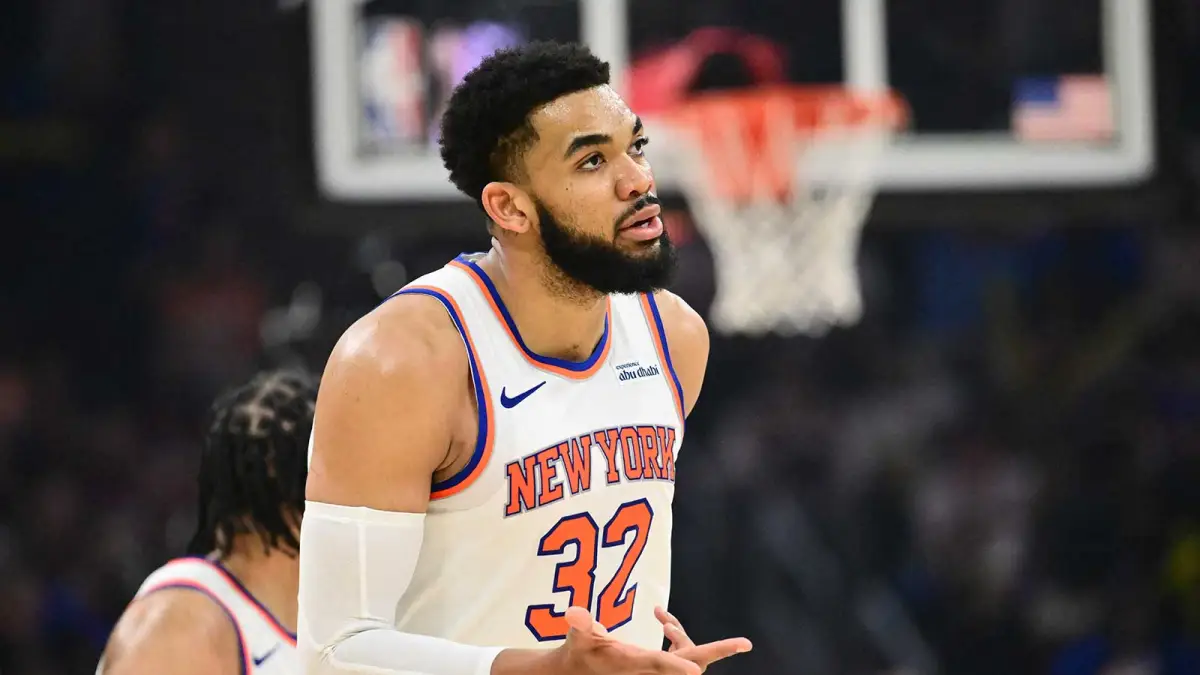
Karl-Anthony Towns can receive a massive Knicks extension, but the second apron makes New York’s $272 million decision extremely complicated.
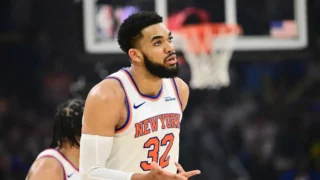
Karl-Anthony Towns arrived in New York carrying questions about his defense, playoff consistency and ability to become the second star on a championship team. One season later, many of those doubts have disappeared.
Towns helped the Knicks win their first NBA championship in 53 years, accepted a less dominant offensive role and produced the most convincing postseason of his career. That success has created a different problem for the organization: determining how much it should pay to keep him through the remainder of his prime.
The potential Karl-Anthony Towns Knicks extension could reach approximately four years and $272 million. New York reportedly wants to preserve its partnership with the All-Star center, but a full maximum offer is considered unlikely. The eventual decision will affect far more than one player—it could determine whether the Knicks possess enough flexibility to sustain a championship roster.
Towns Earned His Leverage When the Pressure Was Highest
Towns’ regular-season value was obvious. His shooting opened driving lanes for Jalen Brunson, his rebounding stabilized the frontcourt and his passing gave the Knicks another way to initiate offense. Centers could not remain near the rim without allowing one of the greatest shooting big men in NBA history to attack from the perimeter.
The playoffs strengthened his negotiating position. New York outscored opponents by 258 points during Towns’ 578 postseason minutes, the best single-playoff plus-minus recorded by any player across the NBA’s 30 seasons of play-by-play data.
That number, highlighted in the NBA’s statistical review of the Knicks’ championship run, demonstrated how effectively Towns connected New York’s starting lineup. He did not always produce the largest scoring total, but the team consistently dominated with him on the floor.
His defense also improved when the stakes increased. Towns competed against larger centers, defended pick-and-roll actions with greater discipline and avoided many of the unnecessary fouls that had damaged previous playoff performances. During the opening games of the Finals, he combined efficient offense with some of his strongest defensive work of the season.
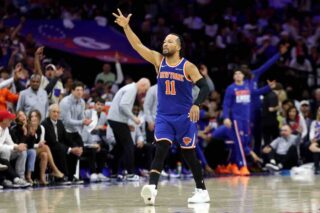
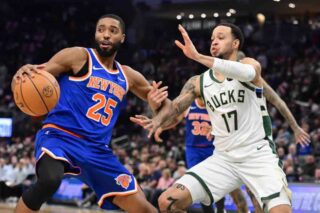
Most importantly, he adapted. Towns had spent much of his career functioning as the principal offensive option. With the Knicks, he accepted that Brunson would control late possessions and that OG Anunoby or Mikal Bridges might receive more shots on certain nights.
That willingness to sacrifice helped transform a collection of expensive players into a championship team. It also gives Towns a reasonable argument for long-term security. He proved that his unusual offensive skill set can work at the center of a title-winning structure.
New York must also consider how difficult he would be to replace. Few centers combine elite outside shooting, rebounding and playmaking. Losing Towns would force the Knicks to change their offensive identity rather than simply insert another big man into the same role.
The Second Apron Turns Loyalty Into a Financial Risk
The question is not whether Towns deserves another contract. It is whether the Knicks can afford to give him every available dollar.
Towns is scheduled to earn approximately $57 million in 2026-27 and holds a player option worth around $61 million for the following season. New York therefore maintains contractual control for at least one year and potentially two, reducing the urgency to immediately approve a four-year maximum extension.
The NBA’s new financial system makes the decision especially delicate. The 2026-27 second-apron threshold is $221.686 million, and exceeding it creates significant restrictions on roster building.
Teams above the second apron lose access to important methods of adding talent. They cannot use the traditional mid-level exception and face limitations when combining salaries in trades. For a team already paying Brunson, Towns, Anunoby and Bridges, another maximum contract could make future improvements extremely difficult.
The Knicks have already benefited from financial sacrifices. Brunson accepted an extension below the maximum available salary, while Bridges also left money on the table to remain with the organization. A similar compromise from Towns would allow New York to reward him without completely sacrificing flexibility.
Age must also enter the calculation. Towns will turn 31 during the 2026-27 season, meaning a four-year extension would cover several seasons beyond his physical prime. Large centers can remain productive because shooting does not disappear, but mobility and defensive recovery often decline with age.
Waiting would give the Knicks another season to evaluate his health, defensive sustainability and partnership with Brunson. It would also provide Towns with an opportunity to prove that his championship performance represented a permanent evolution rather than one exceptional postseason.
There is risk on both sides. Delaying negotiations could create unnecessary uncertainty around a player who has embraced New York and helped deliver a title. Offering the full maximum, however, could leave the Knicks unable to replace aging role players or respond to future trade opportunities.
The most logical solution is a substantial extension below the maximum, perhaps with incentives or contractual options that protect both parties. Towns would receive long-term security, while New York would preserve enough financial space to maintain a competitive supporting cast.
Winning the championship justified the trade for Towns. Building a potential dynasty will require the Knicks to be more disciplined than emotional when deciding his next contract.
The difference between a maximum deal and a carefully negotiated compromise may not change the starting lineup today. It could determine whether New York still has a championship roster three years from now.