Billy Donovan’s exit from the Chicago Bulls has reignited speculation about the New York Knicks’ coaching future, with Mike Brown already facing scrutiny during the playoffs.
The New York Knicks are still locked into the urgency of a first-round playoff battle, but the conversation around the franchise is no longer centered only on the court. As the series unfolds, attention has started drifting toward the bench, where Mike Brown is already facing growing scrutiny. In the NBA, that is often how these situations develop: one disappointing stretch raises questions, and one newly available coach turns those questions into a full-blown storyline.
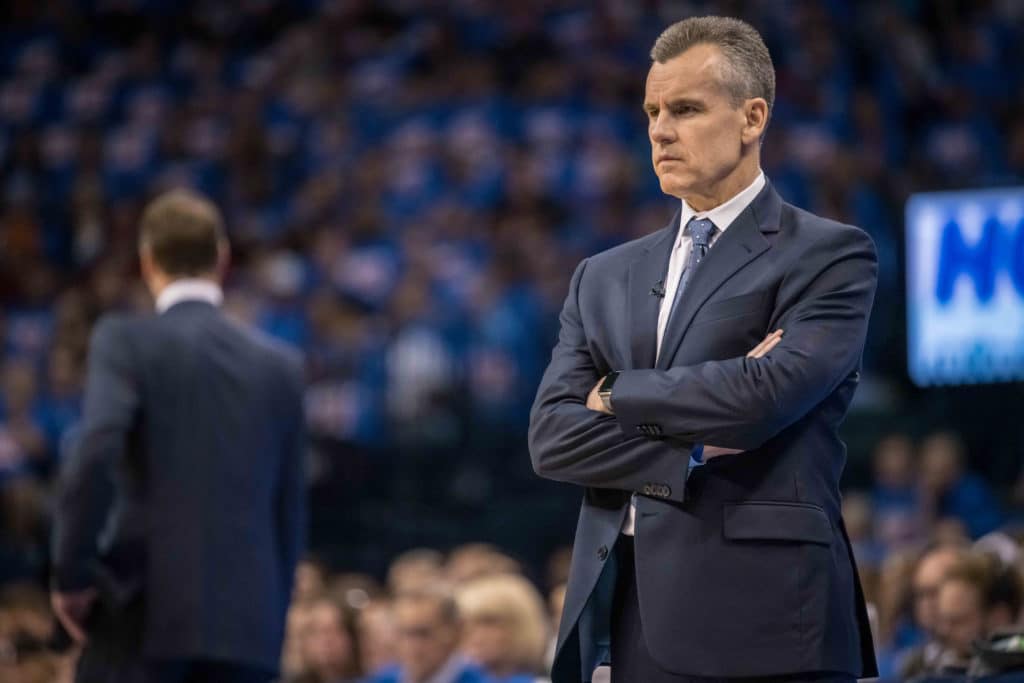
That is exactly what has happened with Billy Donovan.
Donovan is now one of the most intriguing names on the market after stepping away from the Chicago Bulls following six seasons. Multiple reports say the Bulls wanted him to stay, but Donovan chose not to exercise his option for the 2026-27 season after major front-office changes, believing it made sense to give the incoming leadership group a clean slate. Reuters reported that Chicago’s organizational reset included the recent dismissal of top basketball executives, and ESPN’s reporting noted that Donovan had previously drawn interest from other organizations while still under contract with the Bulls, including the Knicks last offseason.
That last detail is what makes this story particularly compelling in New York.
Why Billy Donovan’s Availability Changes the Knicks Narrative
The Knicks are not simply being linked to a respected coach who happens to be available. They are being linked again to someone they already tried to pursue. According to ESPN’s reporting, New York had interest in Donovan while he was still with Chicago, which means this is not a random rumor cycle or a name being floated without foundation. There is already a known connection between the coach and the franchise’s recent thinking.
That history matters because it changes how people interpret the current moment. If Brown were operating from a place of total security, Donovan’s availability might be treated as little more than an interesting league-wide development. But because Brown is already being discussed in hot-seat terms by speculative league coverage during the playoffs, Donovan’s sudden presence on the market gives that chatter more weight. A situation that might have been dismissed as background noise now feels more plausible, even if no formal move is imminent.
Donovan’s appeal is easy to understand. He brings years of NBA experience, a reputation for calm leadership, and a résumé that includes both professional success and elite-level pedigree from his college career. Even though his Chicago tenure was uneven in terms of results, he remained a respected figure around the league, and his departure appears to have been handled professionally rather than as the result of conflict or collapse. Reports indicate that the Bulls valued him enough to want him back, while ownership publicly praised the way he handled the transition.
For the Knicks, that profile is naturally attractive. Franchises in contention rarely want chaos; they want stability, experience, and credibility. Donovan checks all three boxes.
What a Coaching Shift Could Mean for New York’s Future
Of course, the biggest question is not whether Donovan is qualified. It is whether the Knicks are truly headed toward another coaching decision.
That part remains uncertain. There is still a meaningful difference between playoff frustration and organizational action. New York may decide that whatever turbulence appears in the first round is not enough to justify a major change. Front offices know that postseason narratives can become exaggerated quickly, especially in a market as intense as New York. A rough stretch, a tactical mistake, or a disappointing result can instantly create the impression that sweeping change is needed.
Still, timing is everything in the NBA, and Donovan becoming available at this exact moment makes the situation more complicated. Coaching opportunities do not open cleanly very often, especially when they involve a proven name entering the market on his own terms. That is part of what makes this moment different. Donovan is not coming off a firing clouded by dysfunction. He is emerging from Chicago as a respected coach who chose to step away during an executive transition, with league insiders already suggesting his name will surface in coaching searches depending on how the postseason develops.
For New York, that creates a real dilemma. If the Knicks fall short and ownership or the front office starts questioning whether Brown is the right voice for the long term, Donovan could quickly become one of the first names considered. And because there was prior interest, this would not require a dramatic leap in logic. It would feel more like unfinished business resurfacing at the right time.
There is also a broader basketball reason this matters. Coaching changes are rarely just about play-calling. They are about direction, trust, and how a franchise sees its competitive window. A team with major ambitions does not evaluate its bench in isolation. It asks whether the current coach is maximizing the roster, managing pressure effectively, and capable of guiding a group through the expectations that come with contending in the Eastern Conference.
That is why Donovan’s name has traction. He represents both familiarity and possibility. To some, he would offer a steadier long-term hand. To others, he would symbolize the kind of reset that teams consider when they believe a strong roster may need a different voice to reach another level.
For now, the Knicks’ priority remains the playoffs. That is the only storyline that truly matters inside the organization. But outside the building, the speculation is understandable and likely to intensify. Billy Donovan is available, the Knicks have liked him before, and Mike Brown is already feeling the pressure that comes with high expectations in New York. Those three facts are enough to ensure this is not a rumor that disappears quickly.
In other words, even while New York is trying to win a series, its future may already be part of the conversation.










 Knicks News10 months ago
 Knicks News10 months ago