Connect with us

Knicks News

Pacome Dadiet’s Summer League Struggles Leave Knicks Facing a Difficult Decision

Published

on

Pacome Dadiet flashed scoring potential in the NBA Summer League, but inconsistent shooting has raised new questions about his role with the New York Knicks entering the 2026-27 season.

For most young NBA players, Summer League serves as an opportunity to prove they are ready for a larger role. For Pacome Dadiet, it became a reminder that potential alone is rarely enough to earn meaningful minutes on a championship contender.

The New York Knicks entered Las Vegas hoping to see noticeable growth from one of their most intriguing young prospects. Instead, they left with more questions than answers. While Dadiet displayed flashes of the offensive talent that made him an appealing prospect, his inconsistency—particularly as a perimeter shooter—prevented him from making the statement performance many expected.

That doesn’t erase his long-term upside, but it does complicate the Knicks’ evaluation as they finalize the roster for another title defense.

Dadiet Showed Promise, But Efficiency Remains a Major Concern

On the surface, Dadiet’s scoring production offered reasons for optimism. Averaging 15.3 points per game across four Summer League appearances demonstrates his confidence as an offensive player and his willingness to attack.

However, a deeper look at the numbers reveals why the coaching staff is unlikely to be fully satisfied.

Dadiet converted just 36.4 percent of his field-goal attempts while struggling from beyond the arc, connecting on only 16 percent of his three-point shots despite averaging more than six attempts per game. For a Knicks team built around the shot creation of Jalen Brunson and the spacing provided by Karl-Anthony Towns, reliable perimeter shooting is not simply an advantage—it is a necessity.

The struggles became even more noticeable considering his overall on-court impact. New York recorded negative plus-minus figures in each of Dadiet’s four appearances, and he missed the team’s lone Summer League victory.

While plus-minus alone should never determine a player’s value, it reinforces the broader picture that his offensive production did not consistently translate into positive team results.

What’s Next for Pacome Dadiet and the Knicks?

Despite the disappointing week in Las Vegas, there are legitimate reasons for patience.

Dadiet’s performances in the G League last season painted a far more encouraging picture. He averaged 23.1 points per game while shooting 46.6 percent from the field, demonstrating the scoring instincts and offensive versatility that convinced the Knicks to invest in his development.

The challenge now is transferring those skills to the NBA level.

The speed of decision-making, defensive intensity and limited offensive opportunities on a championship roster create a completely different environment than the G League. Players rarely receive the same freedom to experiment, making efficiency and consistency far more valuable than raw scoring totals.

For Dadiet, the path forward appears clear.

If he can become a dependable floor spacer, defend multiple positions and make quick, unselfish decisions with the basketball, he possesses the athletic profile to carve out a long-term rotation role. Those complementary skills are exactly what Mike Brown demands from role players surrounding stars such as Brunson, Towns and Mikal Bridges.

If the perimeter shot remains inconsistent, however, earning regular NBA minutes will become increasingly difficult. Championship teams simply cannot afford prolonged offensive inconsistency from players occupying complementary roles.

Fortunately for both Dadiet and the Knicks, there is no immediate pressure to make a permanent decision. The organization can continue investing in his development while carefully evaluating his progress throughout training camp and the preseason.

Summer League should be viewed as one important data point rather than a final verdict. Dadiet has already demonstrated enough talent to justify continued patience, but the expectations will undoubtedly rise.

The coming months may ultimately determine whether his difficult week in Las Vegas was simply a temporary setback—or an indication that additional development is still required before he can become a reliable contributor on a team with championship aspirations.

AdvertisementAdvertisement

Knicks News

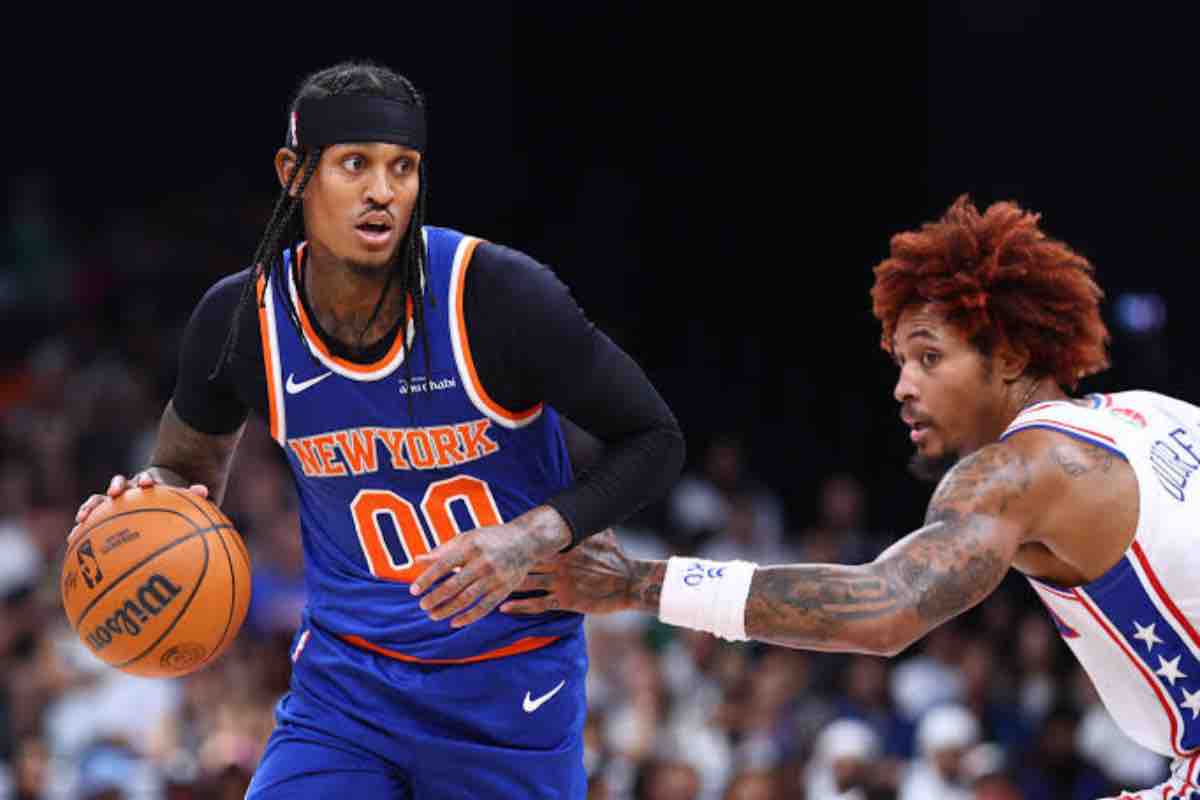
Knicks Bring Back Jordan Clarkson on a Bargain Deal—but Is He the Missing Piece or a Tough Rotation Dilemma?

Published

on

The New York Knicks have re-signed Jordan Clarkson on a one-year veteran minimum contract. Here’s why the move could be one of the smartest—and most intriguing—decisions of the offseason.

The New York Knicks have opted for continuity by bringing Jordan Clarkson back on a one-year, $3.9 million veteran minimum contract after their championship-winning campaign. From a financial standpoint, the move carries almost no risk. From a basketball perspective, however, it raises several fascinating questions about Mike Brown’s rotation heading into the new season.

Clarkson returns knowing exactly what is expected of him. He isn’t being asked to become a star or carry the offense every night. Instead, his role is to provide instant scoring, create offense when possessions stall, and give New York another experienced weapon off the bench.

For a team looking to defend its NBA title while carefully managing payroll, the deal represents tremendous value. Whether it becomes a major success will depend on how effectively Clarkson’s strengths fit within an already deep backcourt.

Why Re-Signing Clarkson Makes Perfect Financial Sense

Few players with Clarkson’s offensive résumé are available for the veteran minimum.

Although his production declined to 8.6 points and 1.3 assists over 72 regular-season appearances last season, the veteran guard continued to show flashes of the microwave scorer who has built a long NBA career by creating points in difficult situations.

His limited role during the NBA Finals—logging only 30 total minutes across five games—made it clear that he wasn’t an indispensable piece of New York’s championship rotation. At the same time, it created an opportunity for the Knicks to retain a proven veteran without making a significant financial commitment.

For a franchise operating carefully under the league’s salary cap restrictions, retaining experienced depth at such a low cost is difficult to criticize.

Clarkson already understands the system, the locker room, and the expectations that come with playing for a championship contender. That familiarity eliminates the adjustment period that often comes with signing outside free agents.

Can Clarkson Deliver Instant Offense Without Creating New Challenges?

Offensively, Clarkson offers a skill set that remains highly valuable in today’s NBA.

He is capable of attacking off the dribble, getting into the paint, drawing contact, and creating his own shot when offensive possessions begin to break down. Few bench players possess his confidence in late-clock situations, making him an ideal option when the second unit struggles to generate quality looks.

That scoring ability is precisely why the Knicks wanted him back.

However, Clarkson’s game has always come with trade-offs.

His aggressive shot selection can sometimes disrupt offensive rhythm, while his defensive limitations often require strategic lineup combinations to avoid unfavorable matchups. Against elite opponents, those weaknesses become more difficult to hide, particularly during the postseason when every possession carries greater importance.

Head coach Mike Brown now faces an intriguing challenge.

The Knicks boast one of the deepest backcourts in the Eastern Conference, and balancing minutes between multiple guards without sacrificing chemistry will require careful management throughout the season. Clarkson’s offensive firepower is undeniable, but maximizing his value means placing him in situations where his strengths outweigh his defensive shortcomings.

Ultimately, New York isn’t relying on Clarkson to transform the franchise. They already have an established championship core led by Jalen Brunson and one of the NBA’s most complete starting lineups.

Instead, they’re betting that an experienced scorer on a veteran minimum contract can provide valuable offensive bursts over the course of an 82-game season while remaining ready whenever the team needs an instant spark.

If Clarkson embraces that role, this inexpensive reunion could quietly become one of the Knicks’ smartest moves of the offseason. The financial investment is minimal, the upside is significant, and for a reigning champion looking to repeat, adding another proven scorer without compromising roster flexibility is exactly the kind of calculated gamble championship organizations are built on.

Continue Reading

Knicks News

The Next Step for Mikal Bridges Could Make the Knicks Nearly Impossible to Stop

Published

on

Mikal Bridges was one of the New York Knicks’ most efficient players during their championship run, but expanding his pick-and-roll and isolation playmaking could elevate both his game and the Knicks’ offense.

Mikal Bridges played a vital role in the New York Knicks’ 2026 championship campaign, delivering efficient scoring, elite perimeter defense and remarkable consistency throughout the postseason. Every time the Knicks needed a timely basket or a crucial defensive stop, Bridges seemed to find a way to make a winning play.

Yet even after helping bring an NBA title back to Madison Square Garden, there is still one aspect of his offensive game that could become a major weapon next season.

As opponents increasingly focused on slowing Jalen Brunson during the playoffs, there were moments when New York could have benefited from a second primary creator capable of initiating offense. Bridges showed flashes of that ability, but expanding his playmaking responsibilities could transform both his individual ceiling and the overall versatility of Mike Brown’s offense.

Bridges Already Thrived as an Elite Scorer and Two-Way Wing

Throughout the postseason, Bridges proved why he is considered one of the NBA’s premier complementary stars.

His efficiency rarely dipped, even under playoff pressure, and his polished mid-range game became one of New York’s most reliable offensive options. Whether attacking closeouts, knocking down catch-and-shoot opportunities or scoring from the elbow, Bridges consistently punished defensive mistakes.

At the same time, his defensive versatility allowed the Knicks to match up against virtually any opponent. Guarding multiple positions while maintaining offensive production made him one of the most valuable two-way players during New York’s championship run.

When Brunson faced aggressive traps or double teams, however, the offense occasionally relied on other ball handlers such as Jose Alvarado to organize possessions. While those adjustments proved effective, Bridges possesses the skill set to shoulder a larger share of those responsibilities himself.

Improving His Ball-Handling Could Unlock Another Level for New York

The next stage of Bridges’ evolution is unlikely to revolve around scoring volume. Instead, it could come from becoming a more dynamic creator off the dribble.

His smooth shooting mechanics and dependable mid-range touch already force defenders to respect his jumper. If he becomes more comfortable initiating pick-and-roll actions or consistently creating separation in isolation, defenses will face an entirely different challenge.

Developing a signature dribble move or improving his ability to use ball screens would allow Bridges to attack defenders with greater confidence from the perimeter. Rather than simply finishing possessions, he could begin creating them, forcing opposing defenses to choose between helping on his drives or staying attached to New York’s elite shooters.

That added dimension would be particularly valuable during playoff basketball, where defensive schemes are specifically designed to take the ball out of Brunson’s hands.

Having another player capable of initiating offense at a high level would reduce the pressure on the Knicks’ All-NBA point guard while making the team’s attack significantly more unpredictable. Opponents would no longer be able to load up exclusively against Brunson, knowing Bridges could punish favorable matchups by creating his own shot or generating open opportunities for teammates.

The encouraging aspect for New York is that Bridges has already demonstrated flashes of this expanded role throughout his career. The challenge now is turning those moments into a consistent part of his offensive repertoire.

For a championship team determined to defend its title, internal improvement can be just as valuable as adding new talent. Bridges has already established himself as one of the NBA’s most dependable two-way wings, but refining his pick-and-roll decision-making and isolation playmaking could elevate him into an even more complete offensive weapon.

If that evolution takes place, the Knicks may become even more difficult to defend, giving Mike Brown another elite creator capable of carrying the offense whenever postseason defenses inevitably focus all of their attention on Jalen Brunson.

Continue Reading

Knicks News

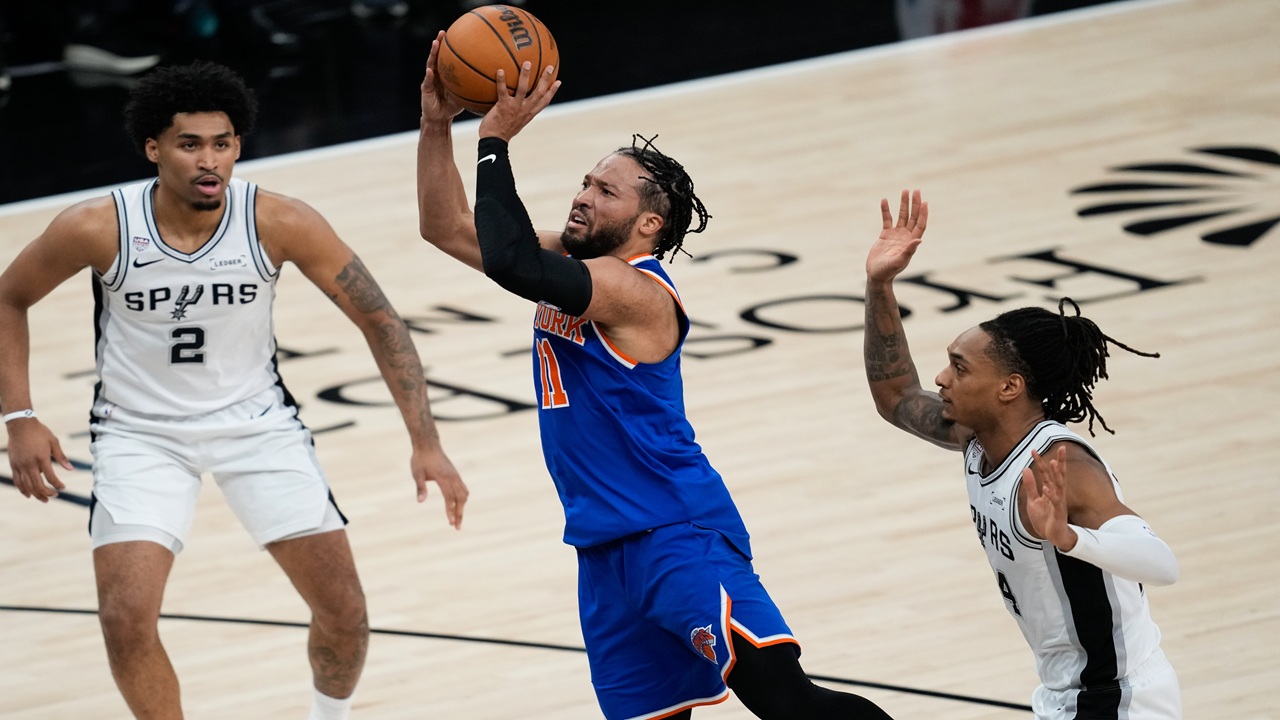
Even After a Historic Championship, Jalen Brunson Still Has One Area to Improve

Published

on

Jalen Brunson dominated the 2026 NBA Playoffs and won Finals MVP, but one aspect of his game could make the New York Knicks superstar even more dangerous next season.

Jalen Brunson’s 2026 postseason will be remembered as one of the greatest playoff performances ever delivered by a point guard. He led the New York Knicks to their first NBA championship in 53 years, captured Finals MVP honors and consistently took over games when the stakes were at their highest.

With a championship already secured, it may seem difficult to identify flaws in Brunson’s game. Yet even the NBA’s elite continue searching for ways to improve, and there is one area that could make the Knicks captain even more complete.

While Brunson’s scoring brilliance and late-game execution were exceptional throughout the playoffs, the NBA Finals revealed occasional struggles against San Antonio’s aggressive defensive pressure. Specifically, his decision-making as a passer became one of the few areas opponents were able to exploit.

San Antonio’s Defense Exposed Brunson’s Biggest Weakness

The Spurs entered the Finals with one of the league’s longest and most versatile defensive units, anchored by Victor Wembanyama’s extraordinary reach and supported by athletic perimeter defenders capable of collapsing driving lanes.

Their strategy was clear: force Brunson into crowded areas, limit his scoring angles and pressure him into making difficult passes.

Although Brunson still controlled games offensively, San Antonio’s defensive scheme disrupted his usual rhythm as a playmaker. Instead of finding open teammates with his trademark precision, he occasionally attempted ambitious passes through multiple defenders or forced kick-outs toward the weak side that were quickly intercepted.

The numbers reflected those challenges.

During the Finals, Brunson posted a modest 1.2 assist-to-turnover ratio, an unusually low figure for one of the NBA’s premier floor generals. While it never overshadowed his remarkable scoring performances, it highlighted how effectively the Spurs were able to contest his passing windows.

Many of those turnovers occurred after Brunson penetrated deep into the paint, where San Antonio’s length reduced both his visibility and available passing angles.

Why Better Decision-Making Could Elevate Brunson Even Further

The encouraging aspect for the Knicks is that Brunson already demonstrated an ability to adjust.

As the championship series progressed, he became noticeably more patient with the basketball. Rather than forcing difficult interior passes, he increasingly relied on controlled dribble retreats, late-clock shot creation and smarter decisions when defenses collapsed.

That adaptability is one of Brunson’s defining strengths and a major reason why he consistently performs under postseason pressure.

Still, there remains room for growth.

Adding more ball fakes before passing, manipulating defenders with his eyes and recognizing help rotations a fraction of a second earlier could significantly reduce turnovers against elite defensive teams. Those subtle refinements would create cleaner passing lanes and allow New York’s shooters to receive the ball in better rhythm.

For a player already regarded among the NBA’s smartest guards, these improvements are entirely realistic.

The frightening reality for the rest of the league is that Brunson accomplished all of this while still having identifiable areas to refine. He already possesses elite footwork, one of basketball’s most reliable mid-range games, exceptional composure in clutch situations and the leadership qualities of a championship-winning superstar.

If he can become even more efficient as a passer against long, switch-heavy defenses, his offensive impact could reach another level.

The Knicks are entering the new season with championship expectations, and Brunson remains the centerpiece of those ambitions. His Finals performance proved he can dominate even against the NBA’s toughest opponents. Eliminating the occasional careless turnover and sharpening his playmaking decisions would only strengthen New York’s chances of defending its title and further solidify Brunson’s place among the league’s all-time great point guards.

Continue Reading

Tendenza

Copyright © 2017 Zox News Theme. Theme by MVP Themes, powered by WordPress.