Connect with us

Rumors

Knicks Missed Out on Moussa Cisse, but This Free-Agent Center Could Be the Perfect Backup Plan

Published

on

The New York Knicks are still searching for a third-string center, and free agent Nick Richards could provide affordable depth, rebounding and interior scoring.

The New York Knicks still have one important roster vacancy to address before the start of the new season. After moving on from Ariel Hukporti, the defending NBA champions need another center capable of providing depth behind their primary options in the frontcourt.

For a brief period, it appeared that New York had found its solution in Moussa Cisse. The Knicks reportedly reached an agreement with the Dallas Mavericks big man, giving supporters reason to believe the center rotation had finally been completed.

That possibility quickly disappeared when Dallas retained Cisse, forcing the Knicks to reopen their search during the latter stages of free agency. With many of the most attractive options already committed elsewhere, the front office may now have to identify an experienced player willing to accept a limited role and a minimum contract.

One name that deserves serious consideration is Nick Richards.

The 6-foot-11 center remains available after spending the previous season with the Phoenix Suns and Chicago Bulls. While he would not arrive as a major addition, Richards possesses enough offensive ability and NBA experience to fill the specific role New York still needs.

Why the Knicks Are Still Searching for Another Center

The Knicks are not necessarily looking for a player capable of handling major minutes or challenging for a starting position. Their priority is finding a reliable third center who can remain ready when injuries, foul trouble or demanding stretches of the schedule require additional frontcourt depth.

That role may appear secondary during the regular season, but it can become extremely important for a team with championship expectations. New York needs someone who can enter the rotation without disrupting the offense, finish around the basket and compete on the glass.

The failed pursuit of Cisse left the roster without that additional insurance. As a result, the Knicks must continue evaluating the remaining free-agent market while protecting their financial flexibility.

Richards would make sense because he already understands the responsibilities of a reserve center. He does not need frequent touches to contribute and can produce through rim runs, offensive rebounds and simple finishes inside the paint.

During the previous campaign, Richards appeared in 48 games between Phoenix and Chicago. He averaged 5.8 points and 5.1 rebounds in only 14.6 minutes per contest, numbers that demonstrate his ability to provide useful production in a restricted role.

His game is not without weaknesses. Richards is not considered an especially physical interior defender, and his limitations on that end could become more visible against stronger or more versatile frontcourts. However, the Knicks would not be signing him to anchor their defense.

They would be adding an experienced reserve who can survive short stretches and give the coaching staff another option during the regular season.

Nick Richards Could Be a Low-Cost Solution for New York

Richards’ strongest argument may be the combination of affordability and offensive reliability.

At this stage of free agency, the Knicks could potentially sign him to a veteran minimum contract, avoiding any significant long-term financial commitment. That would allow New York to complete its center rotation without sacrificing flexibility for future roster moves.

Richards also offers a different profile from former Knicks center Mitchell Robinson. Robinson was the more dominant offensive rebounder and a superior defensive presence around the rim, but Richards is more dependable from the free-throw line.

Robinson averaged 5.7 points and 8.8 rebounds over 60 games last season, while converting only 40.8% of his foul shots. Richards, by comparison, shot 64.4% from the line.

That percentage is not elite, but it would reduce the risk of opponents intentionally fouling New York’s reserve center during important moments. Richards could also give the Knicks a more conventional offensive option around the basket, particularly when the second unit needs a reliable target in pick-and-roll situations.

The comparison with Robinson should not create unrealistic expectations. Richards would not be asked to replace everything the former Knicks center provided, especially his rebounding and rim protection. His responsibility would be far more limited.

He would need to run the floor, set solid screens, finish efficiently and collect enough rebounds to prevent opposing teams from dominating the interior whenever the regular rotation centers are unavailable.

New York’s championship roster does not contain many obvious openings, so the final additions must fit clearly defined roles. Richards appears capable of doing exactly that.

He may not generate the excitement of a major trade or a high-profile free-agent signing, but championship teams often depend on inexpensive veterans who remain prepared despite inconsistent playing time.

After missing out on Cisse, the Knicks cannot afford to wait indefinitely. Richards represents a practical option with NBA experience, adequate production and a price that should fit within the organization’s remaining resources.

For a franchise searching for security rather than star power at the end of its center rotation, he could be the most logical player still available.

AdvertisementAdvertisement

Rumors

LeBron James to the Knicks? Why New York’s Championship Formula Could Be Better Without the NBA Legend

Published

on

Could LeBron James help the defending NBA champion New York Knicks? A closer look at why adding the four-time MVP may actually disrupt the franchise’s winning formula.

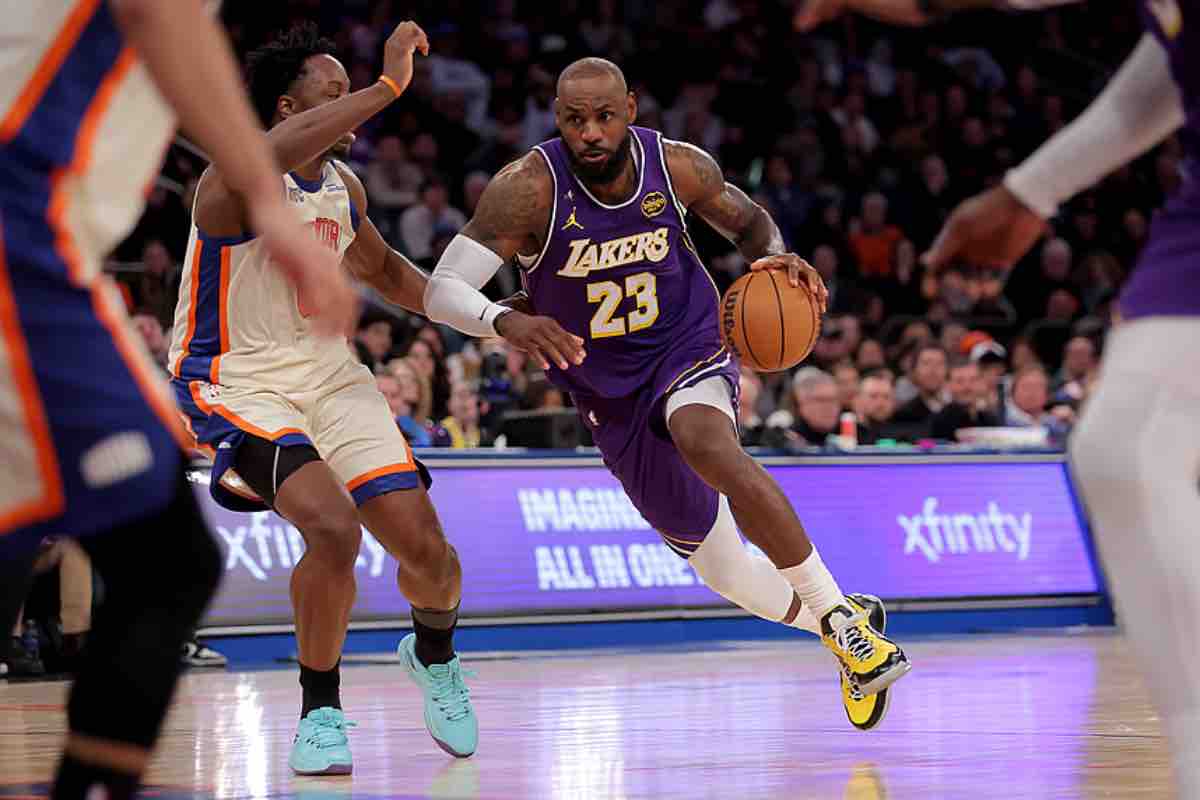
LeBron James becoming an unrestricted free agent would normally send every NBA front office into immediate action. Few players in basketball history have possessed his combination of talent, leadership, basketball IQ, and championship pedigree. Under most circumstances, adding a player of his caliber would be an obvious decision.

But the reigning NBA champion New York Knicks are not in a typical situation.

Fresh off capturing the franchise’s first championship in decades, the Knicks have built something that many organizations spend years trying to create: continuity, chemistry, defensive identity, and clearly defined roles. While LeBron remains one of basketball’s greatest players, New York may actually have more to lose than gain by pursuing him.

Why the Knicks’ Current Core Is Built to Win Without LeBron

One of the biggest reasons behind New York’s championship run was the complete buy-in from every player on the roster.

Jalen Brunson established himself as the unquestioned leader of the franchise, delivering one of the greatest postseason performances in recent memory while earning NBA Finals MVP honors. Around him, Karl-Anthony Towns, OG Anunoby, Mikal Bridges, Josh Hart, and the rest of the rotation embraced clearly defined responsibilities that allowed Mike Brown to implement one of the league’s most balanced systems.

Introducing LeBron James into that environment would inevitably change the team’s hierarchy.

Even at 41 years old, James isn’t simply another veteran role player. His presence immediately reshapes an offense. The ball naturally spends more time in his hands, offensive possessions are frequently initiated through him, and teammates often adjust their own games accordingly.

That could reduce Brunson’s offensive freedom, alter Towns’ role as a secondary creator, and force the Knicks to reinvent an identity that has already proven capable of winning an NBA championship.

New York’s greatest strength wasn’t relying on one superstar carrying the team. Instead, the Knicks overwhelmed opponents with defensive versatility, ball movement, toughness, and unselfish basketball. Altering that formula simply to accommodate another superstar may create unnecessary complications.

Salary Cap Challenges and the Cost of Chasing Another Superstar

Financial flexibility represents another major obstacle.

The NBA’s current Collective Bargaining Agreement includes harsh restrictions for teams operating near or above the second apron, limiting roster flexibility, future transactions, and team-building opportunities.

The Knicks have already worked carefully to avoid placing themselves in that position, making difficult roster decisions to preserve long-term flexibility while maintaining a championship-caliber roster.

Although LeBron is now a free agent, signing him would still require significant financial maneuvering unless he accepted an unprecedented pay cut. Such a move could force New York to sacrifice valuable depth, one of the primary reasons behind its playoff success.

Championship teams rarely succeed with only star power. Reliable bench contributors, defensive specialists, and rotational flexibility often determine postseason outcomes. Weakening those areas to acquire another superstar could ultimately make the roster less balanced than it is today.

There is also the question of long-term planning.

LeBron remains remarkably productive, but he is entering the twilight of an extraordinary career. The Knicks, meanwhile, have assembled a core capable of competing for multiple championships over the next several seasons. Prioritizing sustained contention rather than making a short-term blockbuster appears far more consistent with the organization’s current vision.

That doesn’t diminish what James could still offer. His leadership, playoff experience, basketball intelligence, and ability to elevate teammates remain among the best in NBA history. In the right situation, he could still transform a contender into a legitimate title favorite.

For New York, however, the equation is different.

The Knicks already reached the mountaintop without him. Their chemistry has become their greatest competitive advantage, and disrupting that balance simply because one of the greatest players ever becomes available may not be the smartest basketball decision.

Sometimes the hardest move for a championship front office is resisting the temptation to chase another superstar.

For the defending champions, standing pat may ultimately be the move that gives them the best chance to repeat.

Continue Reading

Rumors

Jonas Valančiūnas Finally Explains Why He Turned Down the Knicks and Chose Lithuania Instead

Published

on

Jonas Valančiūnas has revealed why he left the NBA for Žalgiris Kaunas despite interest from the New York Knicks. The veteran center says returning home was the deciding factor.

For more than two years, Jonas Valančiūnas remained one of the names most frequently linked to the New York Knicks whenever the franchise searched for additional frontcourt depth. The experienced Lithuanian center appeared to fit the profile of the physical interior presence New York valued, and speculation surrounding a potential partnership resurfaced repeatedly during multiple offseason windows.

This summer, however, the story finally reached its conclusion.

Rather than accepting another opportunity in the NBA, Valančiūnas decided to end his 14-year career in the league and return to his homeland, signing a two-year contract with Žalgiris Kaunas. His decision officially closed the door on any possibility of joining the defending NBA champions and provided a clear explanation for why New York’s long-standing interest never turned into an agreement.

Speaking after his arrival in Kaunas, the veteran made it clear that basketball was only part of the equation. The chance to return home ultimately outweighed every professional opportunity that remained available in the NBA.

Why Valančiūnas chose Žalgiris over another NBA opportunity

For many veterans approaching the later stages of their careers, the final contract is about more than money or championship aspirations.

That proved to be the case for Valančiūnas.

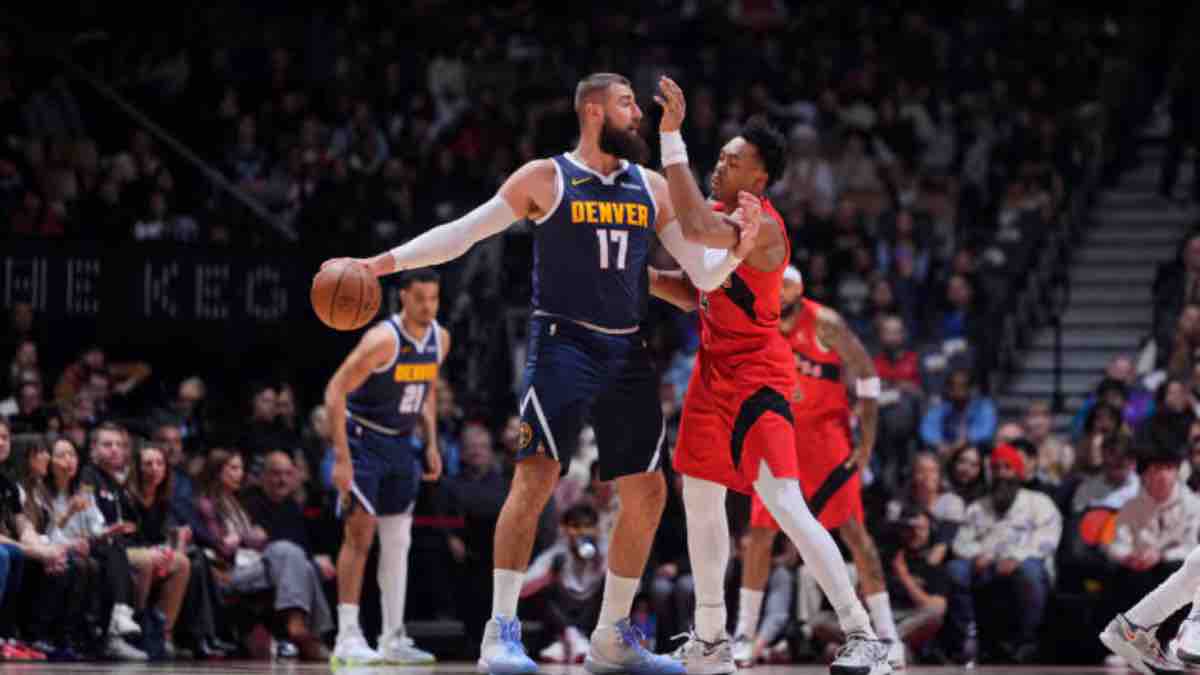
After spending 14 seasons in the NBA with the Toronto Raptors, Memphis Grizzlies, New Orleans Pelicans, Washington Wizards and Denver Nuggets, the 33-year-old chose a different path. Instead of extending his NBA career, he opted for a return to Lithuania, where he will become one of the marquee players for Žalgiris Kaunas.

According to Valančiūnas, the decision followed extensive discussions before he concluded that the emotional significance of playing in front of Lithuanian fans outweighed any remaining opportunities overseas.

He emphasized not only the appeal of returning to his home country but also his admiration for the project that Žalgiris has built in recent years. Representing one of Europe’s most prestigious clubs while reconnecting with his roots ultimately became a far more meaningful destination than accepting another supporting role in the NBA.

It was a decision shaped by family, identity and legacy as much as basketball.

The Knicks were interested, but financial and roster realities stood in the way

Even if Valančiūnas had decided to continue playing in the NBA, a move to New York was never going to be straightforward.

The Knicks had monitored the veteran center for multiple offseasons, viewing him as an experienced interior presence capable of strengthening the frontcourt. His rebounding, physicality and low-post scoring made him an attractive option, particularly following Mitchell Robinson’s departure to the Boston Celtics.

However, New York’s financial flexibility remains heavily restricted under the NBA’s new collective bargaining agreement.

Operating close to the second salary-cap apron, the Knicks could realistically offer only a one-year veteran minimum contract, making it difficult to compete financially with alternative opportunities.

Role considerations also played an important part.

Mike Brown is expected to continue building the frontcourt around Karl-Anthony Towns as the starting center, while newly signed Andre Drummond projects as the primary backup after replacing Robinson in the rotation. That structure would have left Valančiūnas competing for limited reserve minutes rather than occupying a featured role.

Žalgiris offered the exact opposite scenario.

Instead of accepting a reduced contract and an uncertain position within a crowded rotation, Valančiūnas will immediately become one of the centerpiece players for Lithuania’s most successful basketball club. He will receive significant playing time, leadership responsibilities and the opportunity to perform in front of supporters who have followed his career since its earliest stages.

From New York’s perspective, the outcome also provides clarity.

The Knicks can now fully concentrate on alternative options to reinforce their frontcourt without waiting for a decision that has finally been made. The organization has already committed to maintaining its championship core while searching for cost-effective additions capable of supporting Towns and Drummond throughout another title defense.

Although Valančiūnas would have brought valuable experience and toughness to the roster, his decision illustrates that not every offseason choice is determined by championship contention or financial incentives. Sometimes the strongest motivation is the opportunity to return home.

For Valančiūnas, that meant closing an outstanding NBA chapter by embracing a deeply personal new beginning in Lithuania. For the Knicks, it marks the end of a pursuit that lasted several years and the start of a renewed search for the final pieces needed to defend their NBA championship.

Continue Reading

Rumors

Have the Knicks Already Found Their Next Hidden Gem? Liam Robbins Is Turning Heads in Summer League

Published

on

Liam Robbins is making a strong case for a roster spot with the New York Knicks after an impressive Summer League. The seven-footer could become a valuable frontcourt addition for the defending NBA champions.

The New York Knicks entered the NBA Summer League looking for young talent capable of strengthening the back end of their championship roster. While much of the attention initially focused on recent draft picks and established prospects, another name has quietly emerged as one of the team’s most intriguing surprises: Liam Robbins.

The seven-foot center arrived in Las Vegas without much fanfare after spending the 2025-26 season with the Rip City Remix, the Portland Trail Blazers’ G League affiliate. However, his performances over the past several games have significantly elevated his profile and may have earned him a legitimate opportunity to compete for a place in New York’s plans beyond the summer.

With the Knicks searching for additional depth following the departures of Mitchell Robinson and Ariel Hukporti, Robbins’ emergence could hardly have come at a better time.

Robbins is proving he deserves a longer look from New York

Although Robbins struggled during his first two Summer League appearances, his response has showcased exactly why NBA organizations continue to invest in his potential.

The former SEC Defensive Player of the Year displayed a much more complete game over his next outings, combining interior scoring, rim protection, rebounding and passing while demonstrating the confidence expected from a player fighting for another NBA opportunity.

One of his breakout performances featured 15 points, five rebounds, three assists and four blocked shots, highlighted by his ability to stretch the floor with an outside three-pointer. Rather than viewing that game as an isolated performance, Robbins followed it with another productive display, contributing 13 points, nine rebounds and another made three-pointer, reinforcing the idea that his offensive versatility is becoming increasingly reliable.

Those performances reminded scouts that Robbins offers much more than traditional size.

Before joining the Knicks’ Summer League squad, the 27-year-old had already accumulated professional experience at both the NBA and G League levels. He appeared in 13 games for the Milwaukee Bucks during the 2024-25 seasonwhile also building a consistent résumé in the G League, where he has averaged 8.7 points, 5.1 rebounds and 1.3 blocks across 45 career appearances.

His unique skill set could solve the Knicks’ frontcourt depth concerns

New York’s offseason has dramatically reshaped its center rotation.

Mitchell Robinson’s departure to the Boston Celtics and Ariel Hukporti’s move to Philadelphia have created additional opportunities for players capable of earning reserve minutes behind Karl-Anthony Towns and Andre Drummond.

That is where Robbins becomes particularly interesting.

Unlike many traditional backup centers, he combines legitimate seven-foot size with perimeter shooting ability, giving Mike Brown another potential floor-spacing option without sacrificing rim protection. Modern NBA offenses increasingly value big men who can stretch defenses while remaining effective around the basket, and Robbins appears to possess the tools to develop into that type of player.

Defensively, his timing as a shot blocker and willingness to contest everything around the rim fit perfectly within the identity that carried New York to its championship. Offensively, his improving jump shot creates intriguing possibilities for second-unit lineups that require greater spacing.

For a player fighting to earn another NBA contract, every Summer League game represents an audition. Robbins has taken full advantage of that opportunity by demonstrating noticeable growth as the tournament has progressed.

Given his recent performances, a training camp invitation now appears increasingly likely. Whether he ultimately earns a standard NBA contract, another two-way agreement or begins the season in Westchester, he has successfully placed himself on the Knicks’ radar.

New York’s front office has developed a reputation for uncovering overlooked talent capable of contributing to a winning environment. Robbins could become the latest example of that philosophy.

The defending champions still have decisions to make regarding their frontcourt depth before training camp begins, but Robbins has ensured that his name will be part of those conversations. If he continues building on his recent performances, the Knicks may have discovered one of the most intriguing under-the-radar big men available this offseason—a player whose combination of size, defensive instincts and emerging offensive versatility could eventually make him a valuable contributor on another championship contender.

Continue Reading

Tendenza

Copyright © 2017 Zox News Theme. Theme by MVP Themes, powered by WordPress.