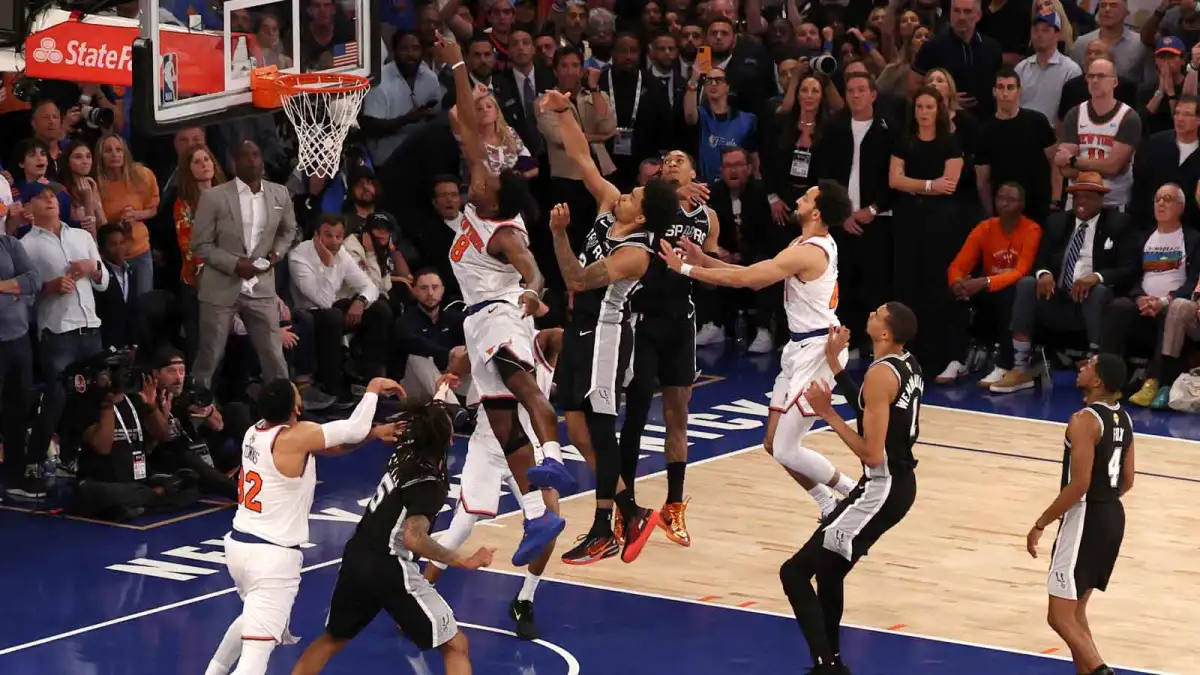
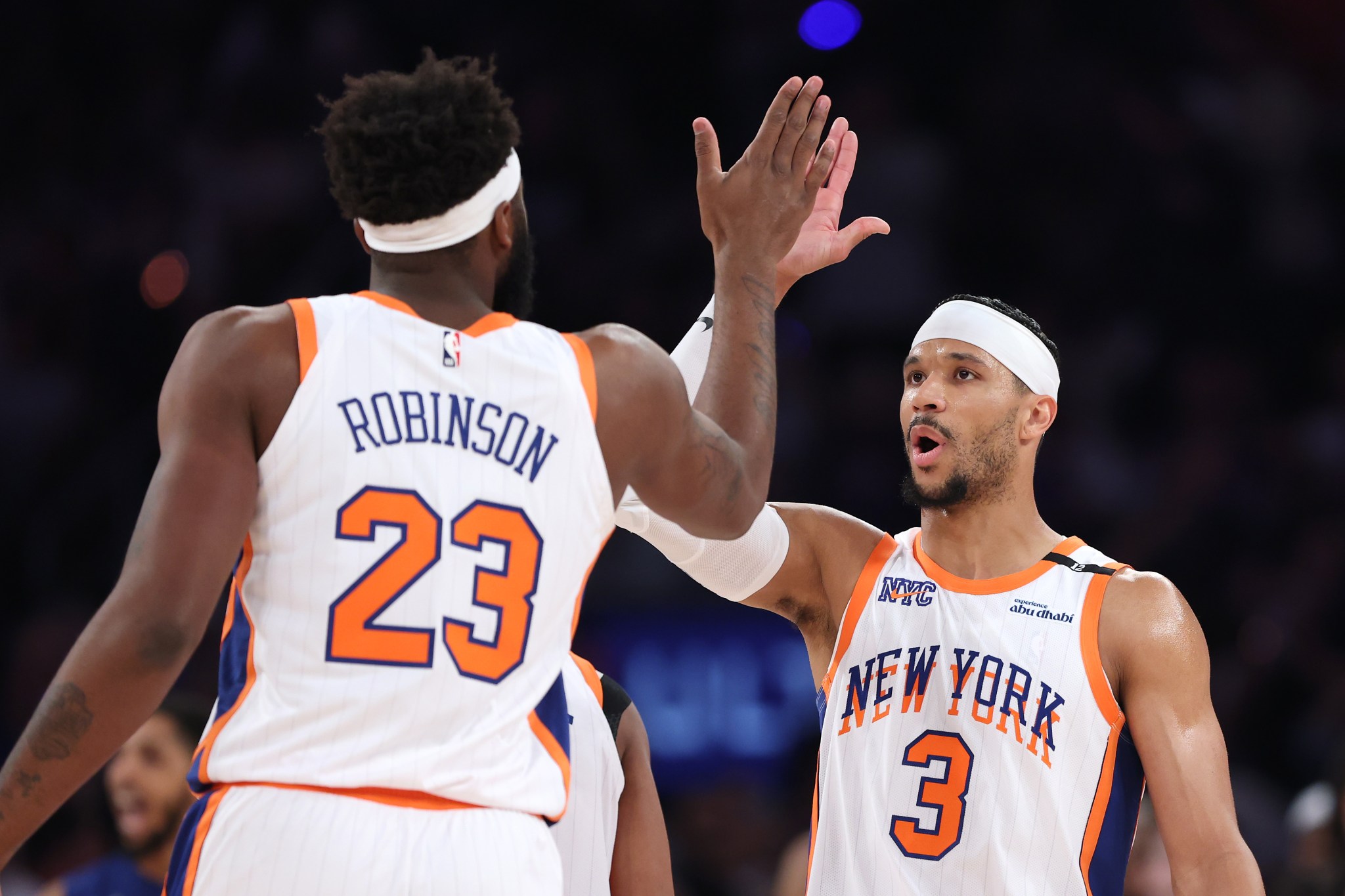
If Mitchell Robinson leaves in free agency, the New York Knicks could target Charlotte Hornets big man Moussa Diabaté as an affordable replacement.
The New York Knicks enter free agency as defending NBA champions, but their biggest challenge may have nothing to do with basketball. Instead, it revolves around finances.
With ownership committed to staying below the NBA’s restrictive second apron, New York has limited flexibility to improve its roster through traditional free agency. That financial reality significantly reduces the team’s spending power, leaving the front office with few realistic options if key contributors depart this summer.
Should Mitchell Robinson leave in free agency, replacing his production with a veteran free agent would likely prove impossible. League salary rules mean the Knicks are expected to have little more than minimum contracts available for outside signings, making the trade market their most practical solution.
Rather than competing in expensive bidding wars, New York appears more likely to identify undervalued players capable of filling important rotational roles without damaging the club’s long-term salary structure.
That strategy has already helped the Knicks build a championship roster, and it may once again shape one of the franchise’s most important offseason decisions.
Moussa Diabaté checks nearly every box for the Knicks
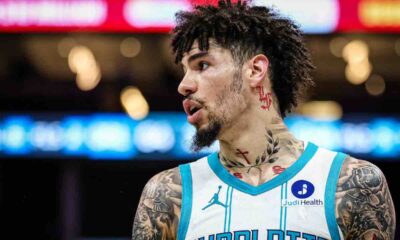
Among the names emerging as potential trade candidates, Charlotte Hornets center Moussa Diabaté stands out as one of the most intriguing possibilities.
The 23-year-old enjoyed a breakout campaign, establishing himself as one of Charlotte’s most productive young frontcourt players. His combination of rebounding, interior defense and efficient finishing mirrors many of the qualities that have made Robinson so valuable throughout his career.
Diabaté averaged nearly eight points and close to nine rebounds while displaying remarkable efficiency around the basket. His energy level, willingness to battle on the glass and ability to defend multiple frontcourt positions would fit naturally into Mike Brown’s defensive system.
Perhaps even more attractive is his contract situation.
Diabaté remains under team control for two additional seasons on one of the league’s most affordable contracts. For a Knicks organization carefully managing every dollar, acquiring a productive young center on a cost-controlled deal would represent tremendous value.
There is another factor working in New York’s favor.
Charlotte’s frontcourt has become increasingly crowded following recent roster moves, potentially creating opportunities for teams looking to acquire one of the Hornets’ young big men. If the Hornets decide to reshape their rotation, Diabaté could become available for the right return.
Of course, replacing Mitchell Robinson would never be simple.
Robinson’s rim protection, offensive rebounding and playoff experience have been central to New York’s defensive identity. Diabaté is still developing and cannot yet replicate that impact consistently. However, his age, athleticism and upward trajectory suggest he possesses significant untapped potential.
For the Knicks, that combination may be exactly what the front office is searching for.
Instead of investing heavily in an aging veteran, New York could acquire a younger player whose best basketball is still ahead of him while maintaining the financial flexibility necessary to keep its championship core together.
If Robinson ultimately departs, Diabaté could quickly emerge as one of the smartest and most realistic targets of the Knicks’ offseason—a move that would balance competitiveness today with long-term roster sustainability.