The New York Knicks are expected to offer Karl-Anthony Towns a contract extension, but not at the maximum salary. Here’s why a team-friendly deal could shape New York’s championship future.
The New York Knicks have reached a point where every major financial decision carries championship implications. After capturing the 2026 NBA title, the organization’s focus has shifted from building a contender to sustaining one. That makes Karl-Anthony Towns’ contract situation one of the defining storylines of the offseason.
Few around the league doubt that the Knicks want Towns to remain a cornerstone of their future. The real question is how much they are willing to invest—and whether the All-Star center is prepared to sacrifice part of his earning potential in exchange for keeping New York’s championship core intact.
While Towns is eligible for a massive four-year extension worth up to approximately $272 million, league expectations continue to point toward a different outcome: an extension, yes, but likely below the maximum value.
Why the Knicks Are Expected to Extend Karl-Anthony Towns
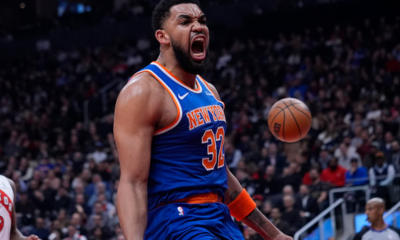
Towns justified every bit of the blockbuster trade that brought him to New York. Throughout the championship season, he evolved into much more than an elite offensive center, embracing a role that prioritized winning over individual statistics.
His floor spacing transformed the Knicks’ offense, his chemistry with Jalen Brunson became one of the NBA’s most dangerous pick-and-roll combinations, and his improved defensive commitment helped New York become a far more complete team than many expected.
The front office understands that replacing a player with Towns’ unique skill set would be virtually impossible. Seven-footers capable of stretching the floor, creating offense, rebounding at a high level, and fitting alongside an elite point guard are among the league’s rarest assets.
That explains why executives around the NBA expect the Knicks to present Towns with a contract extension before the start of the season.
The structure of that deal, however, remains the biggest mystery.
New York has consistently emphasized financial flexibility since assembling its championship roster. Ownership has shown a willingness to spend aggressively, but the organization also recognizes the competitive limitations that come with crossing the NBA’s restrictive second apron.
A full maximum extension would significantly tighten the club’s financial flexibility for years to come, potentially making it much harder to retain valuable role players or improve the roster in future seasons.
A Team-Friendly Deal Could Keep New York’s Championship Window Wide Open
The Knicks have built more than a talented roster—they’ve established a culture centered on sacrifice.
Jalen Brunson famously accepted less than his maximum value to give the franchise greater roster flexibility. Other key contributors, including Mikal Bridges, Jose Alvarado, and Landry Shamet, also chose contracts that reflected the organization’s long-term vision rather than maximizing every available dollar.
That collective mindset has become one of New York’s greatest competitive advantages.
The question now is whether Towns is prepared to follow the same path.
There are reasons to believe he could. Throughout last season, he repeatedly demonstrated a willingness to adjust his game for the benefit of the team. Rather than demanding a larger offensive role, Towns embraced the responsibilities that helped unlock the Knicks’ championship identity, whether that meant spacing the floor, creating opportunities for teammates, or sacrificing touches for a more balanced offense.
Accepting a slightly smaller extension would represent a continuation of that philosophy.
For Towns, the trade-off could be significant. Instead of maximizing one contract, he would help preserve a roster capable of competing for multiple championships over the remainder of his prime. The opportunity to spend the rest of his career in New York while chasing additional titles may ultimately prove more valuable than securing every possible dollar.
From the franchise’s perspective, a discounted extension could become one of the smartest moves of the Leon Rose era. It would allow the Knicks to maintain financial flexibility, preserve depth around Brunson and Towns, and continue adding complementary pieces without triggering the harshest salary cap penalties.
Negotiations are unlikely to be simple, but the direction appears increasingly clear. Both sides have strong incentives to reach an agreement that rewards Towns while protecting the Knicks’ long-term roster-building strategy.
If that balance can be found, New York won’t simply be keeping one of its biggest stars—it could be laying the financial foundation for a dynasty capable of competing for championships throughout the rest of the decade.