Connect with us

Knicks News

Knicks’ Secret Plan? Diawara Mystery Could Decide Robinson’s Future

Published

on

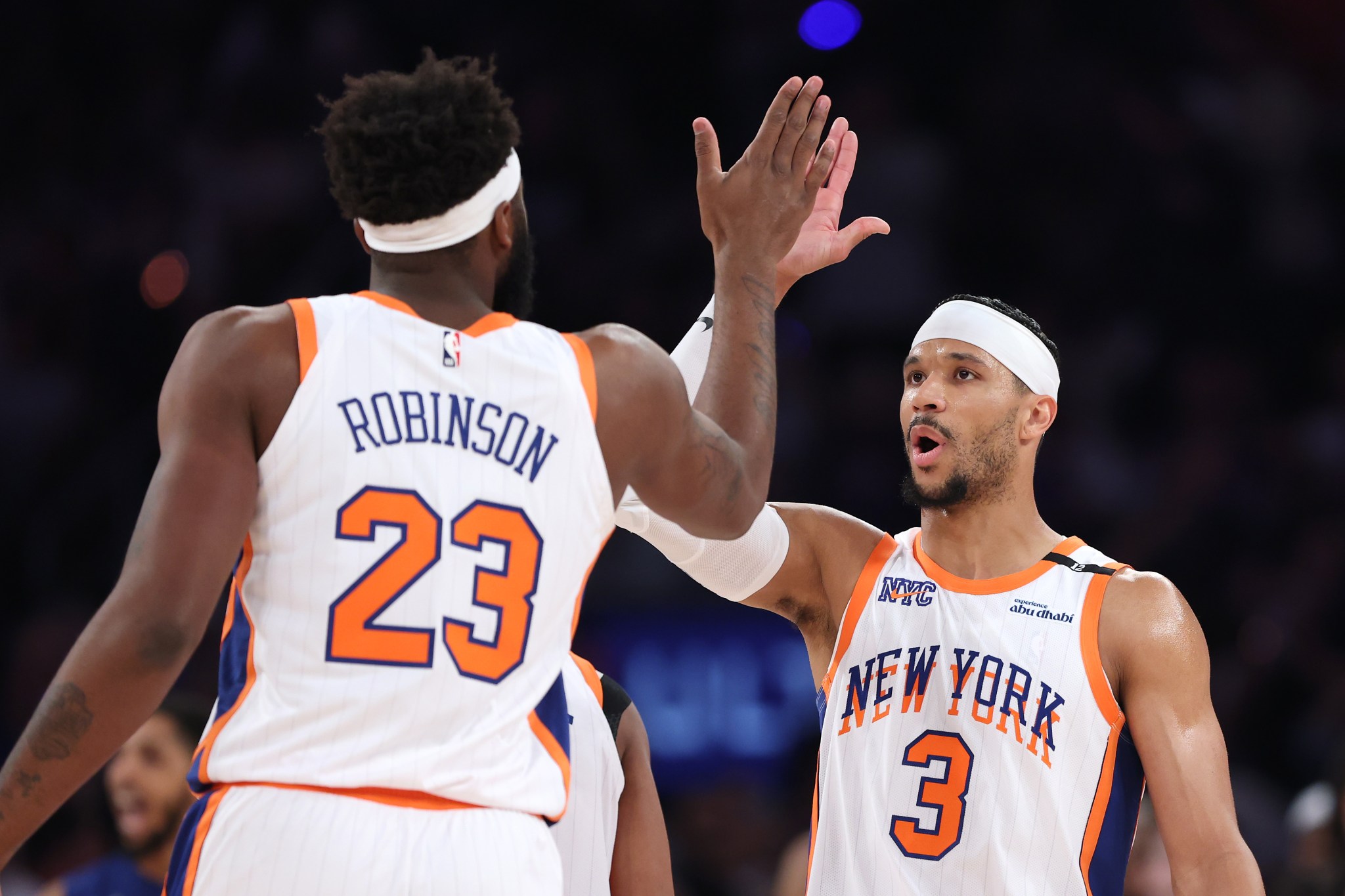
Brian Windhorst reveals NBA rumors about the Knicks possibly hiding Mohamed Diawara amid cap concerns and Mitchell Robinson’s uncertain future.

The New York Knicks are approaching the postseason with championship ambitions, but behind the scenes, a far more complex situation is unfolding—one that could shape the franchise’s immediate future.

At the center of the discussion is rookie Mohamed Diawara, whose sudden disappearance from the rotation has raised eyebrows across the league. After showing promise earlier in the season, his reduced role heading into the playoffs has sparked speculation that goes beyond simple coaching decisions.

According to Brian Windhorst, some NBA insiders believe the Knicks may be strategically limiting Diawara’s exposure. The theory suggests that by keeping him out of the spotlight, New York could be attempting to manage his perceived market value ahead of restricted free agency.

While there is no confirmation that this is the organization’s intent, the fact that such speculation exists highlights how closely rival teams are monitoring the situation. In today’s NBA, even rotation decisions can carry financial implications.

Salary cap pressure and Robinson’s uncertain future

The broader context makes the situation even more intriguing. The Knicks’ salary structure is already under strain, with significant investments tied up in their core players. This creates a delicate balancing act for the front office as it looks to retain talent while maintaining flexibility.

One of the most notable names linked to this uncertainty is Mitchell Robinson. As he approaches a critical point in his contract situation, questions have emerged about whether he fits into the team’s long-term financial plans. Retaining both Robinson and emerging pieces like Diawara could prove challenging without difficult sacrifices elsewhere on the roster.

Even with restricted free agency rights, New York may not be in a position to match aggressive offers from teams with greater cap flexibility. This reality adds another layer of complexity to the decision-making process.

Ultimately, the Knicks are navigating a delicate intersection of performance, development, and financial strategy. What happens with Diawara in the coming months—and how the organization handles Robinson’s future—could define the direction of the franchise well beyond this postseason.

For now, the focus remains on winning. But the real decisions may be just around the corner.

AdvertisementAdvertisement

Knicks News

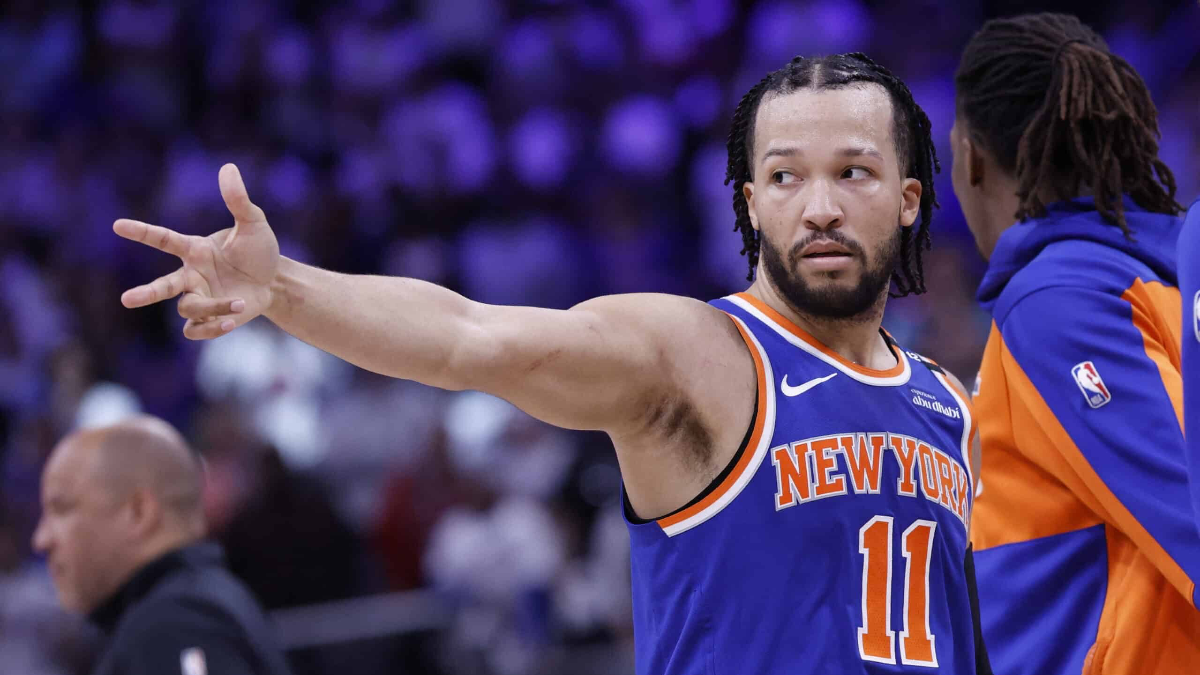
Colin Cowherd Doubts Jalen Brunson — But the Knicks Star Already Has the Proof He’s “That Guy”

Published

on

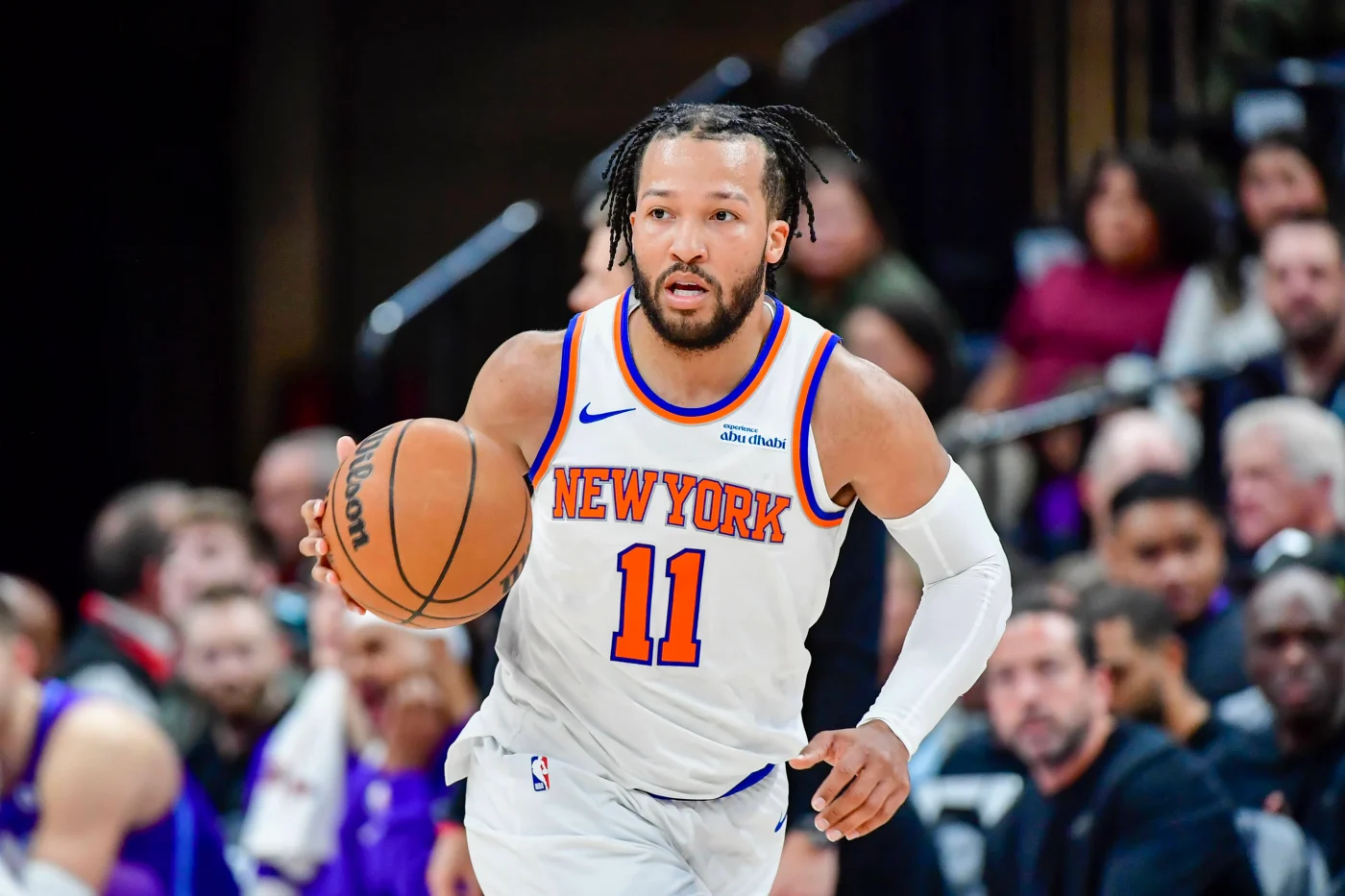
Jalen Brunson’s critics question his championship ceiling, but his NBA Cup MVP, Clutch Player of the Year award, and elite production tell a different story.

The debate around Jalen Brunson has become louder as the playoffs approach, but the pushback against his status often ignores what he has already accomplished. It is fair to say he does not belong in the Nikola Jokić or Victor Wembanyama tier as an all-encompassing force, yet that is not the same as saying he is not a true franchise player. That distinction matters, especially when discussing the New York Knicks and the role he has carved out as their offensive engine.

In December, Brunson did not simply help the Knicks win the 2025 Emirates NBA Cup. He drove them there, then capped the run by earning tournament MVP honors after New York rallied past San Antonio in Las Vegas for the franchise’s first trophy since 1973. NBA.com’s live championship coverage noted that Brunson averaged 33.2 points per game in NBA Cup play and was named MVP of the tournament, while the Knicks beat the Spurs 124-113 in the final. 

That matters because it directly challenges the idea that Brunson shrinks on the big stage. He has already shown that when the lights are brightest, he can command a game, dictate tempo, and deliver a winning performance for a team with enormous pressure attached to it. That is not the profile of a supporting piece pretending to be a star. That is the profile of a lead guard who has already proven he can handle a spotlight that many players never truly master. 

The regular-season résumé only strengthens that case. Brunson finished the 2025-26 season averaging 26.0 points, 6.7 assists, and 3.4 rebounds per game, according to ESPN. Those are not empty numbers either. They sit alongside one of the strongest clutch reputations in the league, which was already validated when he won the 2024-25 Kia NBA Clutch Player of the Year award after leading the NBA in clutch scoring average and field goals made in those situations. 

The real test is not whether Brunson is elite, but whether the Knicks can maximize him

What critics like Colin Cowherd get right is that there are historical questions about building a title team around a smaller lead guard. That concern is real. But where the argument becomes too shallow is in pretending Brunson has not already supplied enough evidence that he can be the emotional and competitive center of a contender. The more relevant question is whether the Knicks have built a roster good enough around him to let that version of Brunson carry all the way through four playoff rounds.

There have already been flashes of what that looks like. On February 4, Brunson produced one of the season’s signature performances, finishing with 42 points, nine assists, and eight rebounds in a double-overtime win over Denver, including 10 points in the second overtime alone. That game was a reminder that his postseason case is not built on narrative alone. He can bend elite opponents with shot-making, control, and late-game nerve. 

So yes, Cowherd is right that Brunson is not Jokic. He is right that Brunson is not the biggest or most physically overwhelming star in the sport. But dismissing him as “not that guy” stretches the argument too far when the same player owns an NBA Cup MVP, a Clutch Player of the Year trophy, and another season at 26 points per game for a top playoff seed. 

Brunson may not fit the classic template. He may never win every national-media argument. But the idea that New York is blindly overrating him no longer holds up. The résumé is already too strong for that. What comes next in the playoffs will not determine whether he belongs in the conversation. It will determine how much higher he can force it to go.

Continue Reading

Knicks News

Knicks’ Secret Weapon Revealed: Brunson-Towns Duo Could Unlock a Finals Run

Published

on

The Knicks’ playoff hopes may hinge on the Brunson-Towns connection. Their pick-and-roll chemistry is becoming unstoppable at the perfect time.

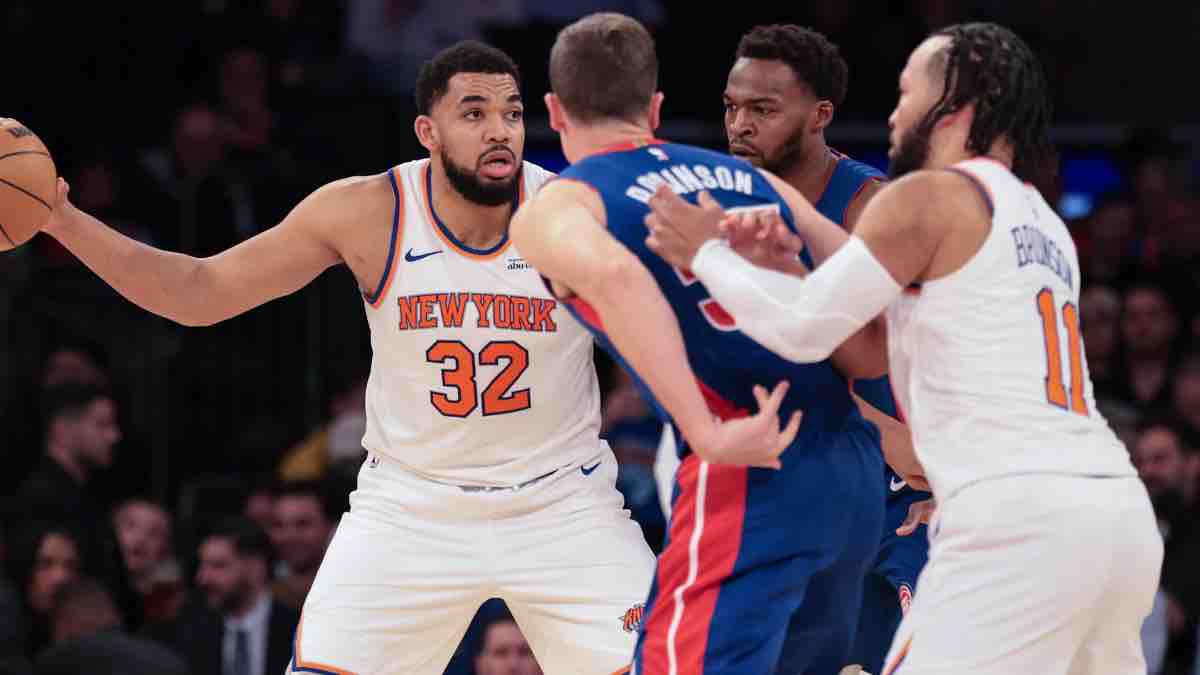
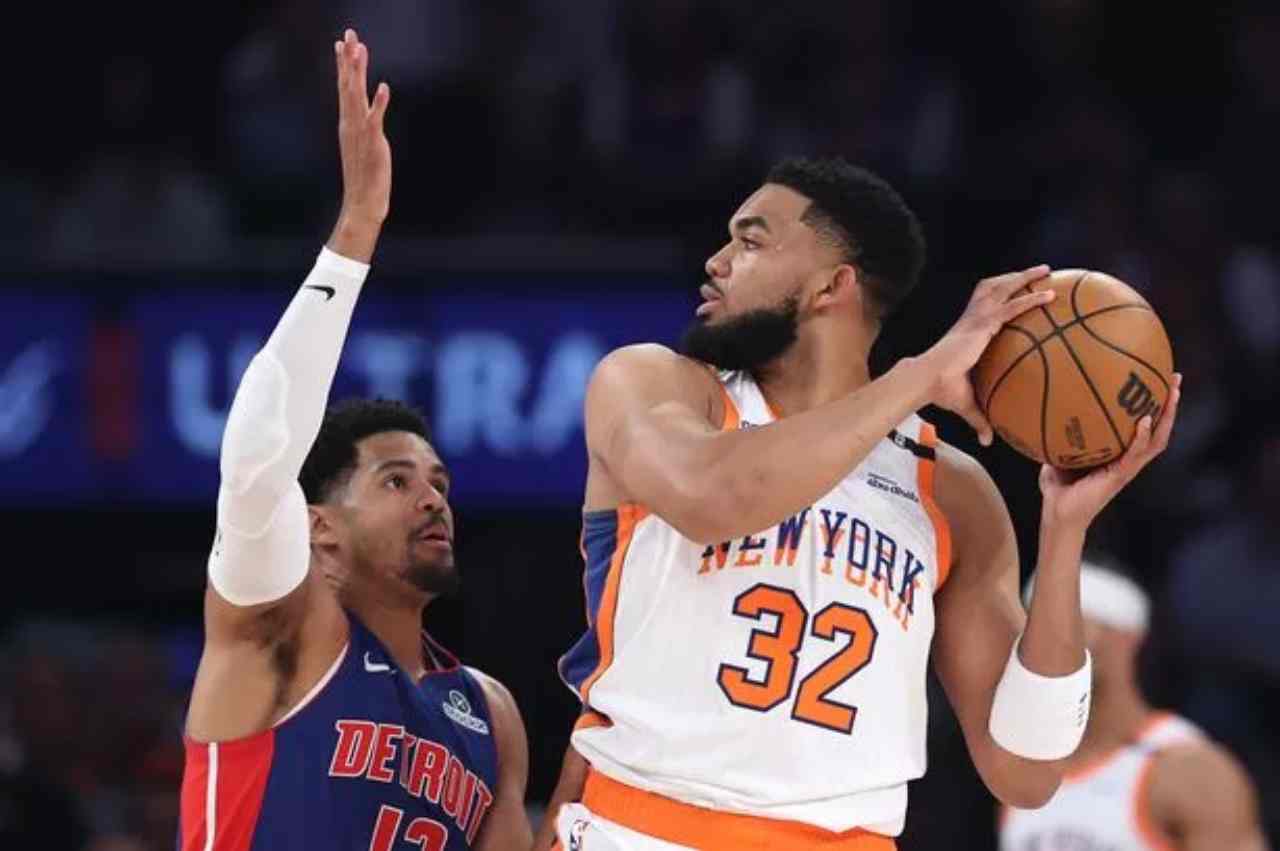
As the New York Knicks head into the postseason, one storyline is gaining momentum at exactly the right time: the growing chemistry between Jalen Brunson and Karl-Anthony Towns.

For much of the season, questions surrounded how effectively the two stars could coexist within the same offensive system. There were flashes of brilliance, but also stretches where the connection seemed inconsistent. Now, however, the pieces are beginning to fall into place.

Recent performances suggest a clear shift. Brunson has taken on more of a facilitator’s role in key moments, while Towns has rediscovered his scoring rhythm. This balance has created a more dynamic offensive structure, one that is harder for opposing defenses to predict and contain.

The timing could not be better. With the playoffs set to begin, the Knicks are finally seeing their two most important offensive players operate in sync.

Pick-and-roll dominance could define New York’s playoff run

At the core of this improved synergy is one of basketball’s most fundamental yet effective actions: the pick-and-roll. According to recent data, Brunson and Towns have emerged as one of the most productive duos in the league when operating off ball screens since early February.

Their efficiency in these situations has not just been good—it has been elite. Whether it is Brunson attacking off the dribble or Towns rolling, popping, or spacing the floor, the combination forces defenses into difficult decisions.

This versatility is what makes the pairing so dangerous. Opponents cannot simply commit to stopping one option without exposing themselves to another. And in the playoffs, where half-court execution becomes paramount, having a reliable two-man game can be the difference between advancing and going home.

For New York, leaning into this strength may be the clearest path forward. While the supporting cast will play an important role, the Brunson-Towns connection has the potential to anchor everything offensively.

If this partnership continues to operate at its current level, the Knicks will not just be competitive—they will be a legitimate threat to make a deep postseason run.

Continue Reading

Knicks News

Nick Wright Admits the Truth About Jalen Brunson—But He Still Misses the Biggest Point

Published

on

Jalen Brunson

Nick Wright questioned Jalen Brunson’s championship ceiling, but the full Knicks picture tells a more complex story ahead of the NBA playoffs.

The debate around Jalen Brunson continues to divide national media, and Nick Wright’s recent comments added another layer to a discussion that refuses to fade. Unlike some of the harsher takes aimed at the New York Knicks star, Wright did not dismiss Brunson outright. Instead, he took a more measured position, acknowledging both the guard’s quality and the historical limitations that come with being an undersized franchise centerpiece.

His argument was rooted in a familiar theme: size still matters in championship basketball. According to Wright, history offers very few examples of smaller lead guards carrying teams all the way to the title, and that reality naturally places a ceiling on how Brunson is viewed. It is not a personal criticism as much as it is a structural concern. In his reading, Brunson can absolutely be a major piece on a great team, but asking him to be the unquestioned best player on a championship winner may be demanding too much.

That perspective is more balanced than the louder criticism Brunson has received elsewhere. It does not deny his talent, leadership, or production. It simply questions whether his profile fits the traditional mold of a championship alpha. And on the surface, that is a fair basketball argument.

The real question is not size alone, but the structure around Brunson

Where this line of reasoning falls short, however, is in the way it isolates Brunson from the environment around him. Championship teams are rarely built on one variable alone. They are built on fit, balance, versatility, and timing. That is the piece often missing when the Brunson conversation becomes overly focused on height and historical precedent.

The Knicks are not asking Brunson to win on an island. Their ambition depends on a broader ecosystem, one that includes Karl-Anthony Towns, a two-way wing group, interior support, and a roster designed to reduce the burden on its lead guard. In that context, the better question is not whether Brunson looks like the classic prototype of a title-winning superstar, but whether New York has assembled enough around him to elevate his strengths and protect his weaknesses.

That is what makes this debate so compelling. Brunson may not silence critics by changing his physical profile, but he can absolutely challenge the assumptions attached to it. If the Knicks make a deep run, it will not be because those concerns were imaginary. It will be because New York found the right formula around a player whose impact goes beyond conventional measurements.

In the end, Wright’s point is not without merit. But it is incomplete. Brunson’s ceiling is not defined only by what history says about players his size. It is also defined by whether this Knicks team is built smartly enough to let him become the exception.

Continue Reading

Trending

Copyright © 2017 Zox News Theme. Theme by MVP Themes, powered by WordPress.