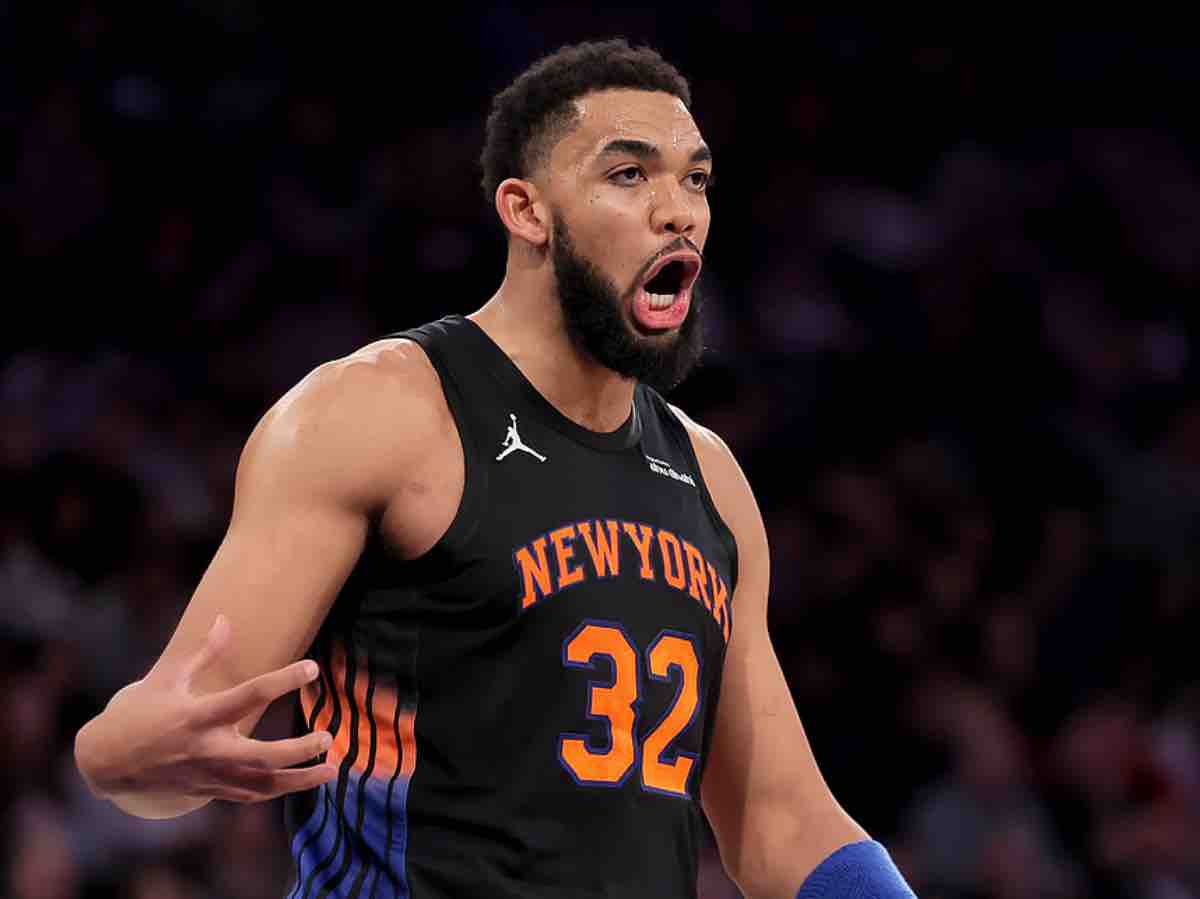
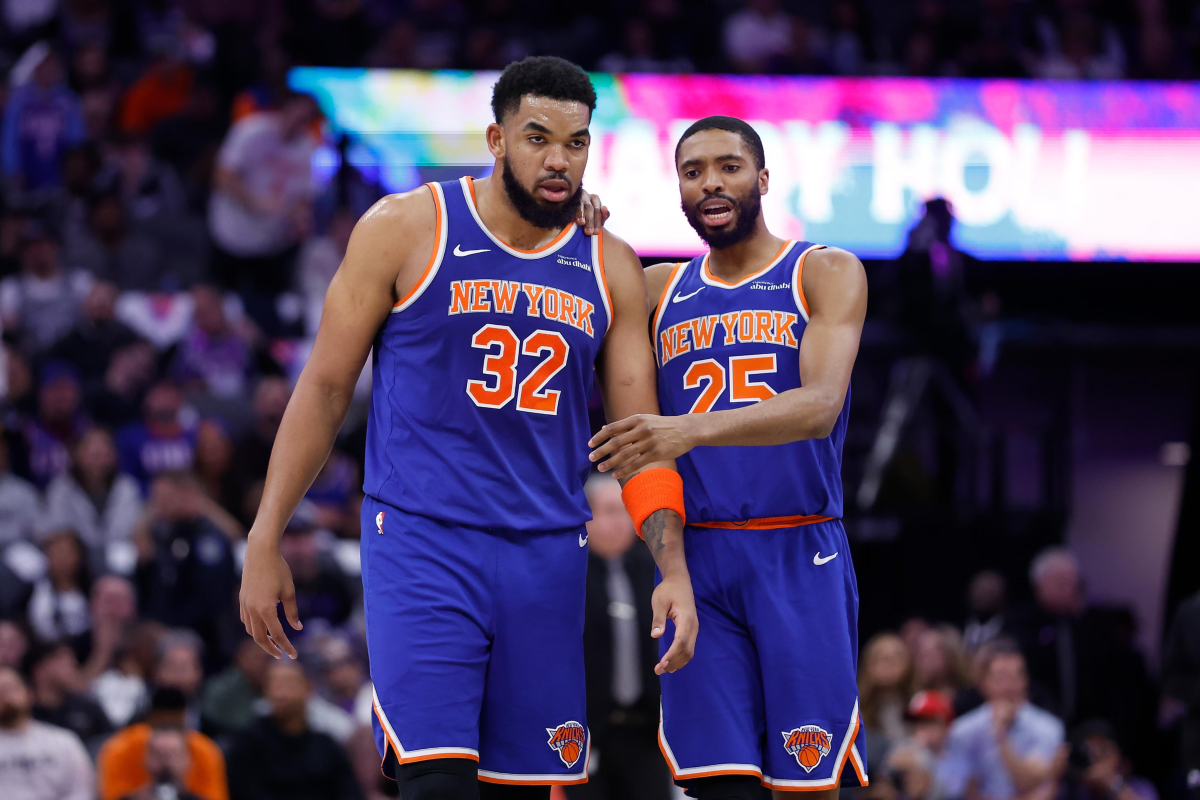
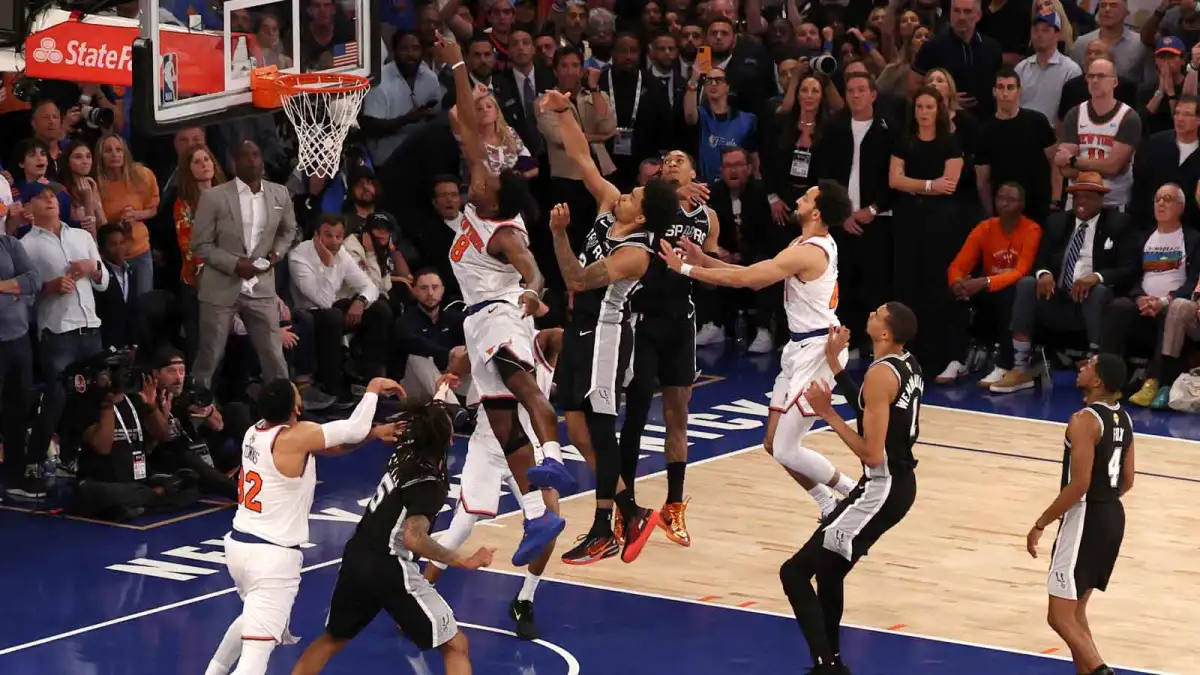
The New York Knicks owned the NBA’s best playoff defense during their 2026 championship run. Can Mike Brown maintain that dominance without Mitchell Robinson?
Jalen Brunson produced the unforgettable shots. Karl-Anthony Towns gave the offense another dimension as a facilitator. New York’s supporting cast delivered timely three-pointers throughout the postseason. Yet underneath all of it was arguably the biggest reason the Knicks became NBA champions: their defense reached another level when the games mattered most.
New York finished the postseason allowing only 104.5 points per 100 possessions, the best defensive rating of any team in the playoffs. It was a substantial improvement from a regular season in which the Knicks ranked seventh at 112.3 points allowed per 100 possessions.
That postseason transformation offers Mike Brown an intriguing blueprint for the title defense. If the Knicks can bring something close to that defensive standard into the regular season, they may not need their offense to be spectacular every night to remain near the top of the Eastern Conference.
How New York transformed into the playoffs’ best defense
The most encouraging aspect of New York’s postseason defense was that there wasn’t one single reason for its success.
OG Anunoby, Mikal Bridges and Josh Hart gave Brown a versatile group of wings capable of covering enormous amounts of space. Anunoby could take the most dangerous matchup, Bridges provided length and mobility on the perimeter, while Hart supplied physicality, rebounding and the ability to switch across positions.
Their versatility also helped protect Brunson. Opponents have historically attempted to exploit the Knicks captain because of his size, but New York became considerably better at preventing teams from repeatedly targeting him. Better rotations and aggressive help allowed Brunson to remain competitive without becoming a defensive pressure point opponents could attack possession after possession.
Towns’ progress mattered as well. He became increasingly comfortable with New York’s defensive responsibilities and avoided many of the mistakes that previously created concerns about whether a championship-level defense could be built around him.
The bench added another layer. Landry Shamet, Miles McBride and Jose Alvarado provided perimeter pressure, while Mitchell Robinson supplied the interior presence that could completely change possessions around the basket.
The result wasn’t simply a talented defensive roster. It became a connected defensive unit with very few easy places to attack.
Robinson is gone, but the Knicks may already have the answers
The obvious concern entering the new season is Robinson’s departure to Boston.
His rebounding, rim protection and ability to survive against different frontcourt matchups will not be easily replicated. Andre Drummond brings size and elite rebounding instincts, but he offers a different defensive profile.
That does not necessarily mean New York’s defense must decline dramatically.
One particularly encouraging postseason number came when Robinson wasn’t playing. According to the figures cited from NBA Stats, the Knicks surrendered just 100.7 points per 100 possessions with Robinson off the floor during the playoffs. That suggests New York’s defensive success was structural rather than dependent entirely on one elite rim protector.
Brown can now build around that foundation. Anunoby and Bridges remain one of the league’s most imposing defensive wing combinations, Hart can cover multiple assignments, and New York still possesses aggressive point-of-attack defenders capable of disrupting opposing guards.
Drummond’s responsibility will therefore be less about becoming another Robinson and more about fitting into an already established structure: control the glass, protect the paint positionally and avoid creating openings behind New York’s aggressive perimeter defense.
For the defending champions, this could become the biggest regular-season advantage of all. Elite defense travels, survives poor shooting nights and reduces the burden on Brunson and Towns to manufacture spectacular offense for 82 games.
New York proved it could defend at a championship level when the pressure was highest. If that version of the Knicks appears consistently during the regular season, the conversation may quickly shift from whether they can survive Robinson’s departure to whether the NBA’s best playoff defense can become the league’s best defense, period.