Connect with us

Knicks News

Jalen Brunson’s Hall of Fame Debate Is Already Over After Knicks’ Historic Title

Published

on

Jalen Brunson’s NBA title, Finals MVP award and Villanova success have already created a compelling Basketball Hall of Fame résumé.

The Basketball Hall of Fame’s 2026 induction ceremony carries a distinct New York flavor, with Amar’e Stoudemire, Doc Rivers and Mike D’Antoni entering Springfield. Their recognition also raises an intriguing question about the defining figure of the Knicks’ current era: has Jalen Brunson already secured his own Hall of Fame future?

At only 29, Brunson should still have several productive seasons ahead of him. Yet his candidacy no longer depends entirely on projections, future milestones or hypothetical achievements. By leading the Knicks to their first NBA championship in 53 years, he added the accomplishment that transforms an excellent career into a historic one.

The Championship Elevated an Already Elite Resume

Brunson had accumulated an impressive collection of individual honors before the Knicks completed their title run. He was already a three-time NBA All-Star and three-time All-NBA selection, while also earning Clutch Player of the Year, Eastern Conference finals MVP and NBA Cup MVP recognition.

Those awards established him as one of the league’s premier guards, but the championship gave them greater significance. Brunson was not a secondary contributor benefiting from another superstar’s dominance. He served as New York’s leader, primary scorer and most trusted decision-maker throughout its postseason journey.

His 45-point performance in the decisive Game 5 against the San Antonio Spurs provided the defining image of the run. Brunson controlled the championship-clinching game before receiving the NBA Finals MVP trophy, confirming his position as the best player on the league’s best team.

That distinction matters in any Hall of Fame conversation. Longevity, statistics and cumulative achievements remain important, but the voters also recognize historic peaks. Brunson’s peak now includes a championship, Finals MVP honors and one of the most memorable postseason performances in Knicks history.

Villanova Success Makes Brunson’s Case Even Stronger

The Basketball Hall of Fame considers a player’s entire basketball career rather than evaluating only NBA production. That broader perspective makes Brunson’s candidacy even more compelling because his winning pedigree began long before he reached New York.

At Villanova, Brunson captured two NCAA championships and was named national player of the year in 2018. He became one of the most accomplished guards of his generation at the college level before developing into an NBA superstar after being selected in the second round.

His career therefore carries several qualities Hall of Fame voters traditionally value: sustained excellence, individual recognition, collegiate success, professional championships and a signature postseason run. Many inductees reach Springfield without possessing such a complete combination.

Brunson can still strengthen his résumé by adding All-Star appearances, All-NBA selections and career totals. His surgically repaired wrist is a legitimate concern for the Knicks, who should prioritize his long-term health instead of rushing him back for the beginning of the season. However, that injury does not erase what he has already accomplished.

There will always be resistance to describing an active player under 30 as a Hall of Fame certainty. In Brunson’s case, though, the central argument has already been resolved. He transformed the Knicks, ended one of basketball’s longest championship droughts and delivered a Finals performance that will remain part of New York sports history.

The remaining years of his career may determine how high Brunson eventually ranks among the game’s great guards. They should not determine whether he belongs in Springfield. The 2026 championship settled that question.

AdvertisementAdvertisement

Knicks News

Knicks’ Bold Yves Missi Trade Offer Could Solve Their Biggest Roster Problem

Published

on

A hypothetical Knicks trade involving Miles McBride and a protected 2033 first-round pick could bring Pelicans center Yves Missi to New York.

The New York Knicks have already encountered resistance in their search for a young center, but their interest in Yves Missi makes basketball sense. After losing Mitchell Robinson in free agency, the defending champions need an athletic big man who can protect the rim, rebound and develop alongside their established core.

New Orleans has reportedly rejected multiple approaches and continues to view Missi as an important part of its future. If New York decides to reopen negotiations, another conservative proposal is unlikely to change that position. The Knicks may have to include a meaningful draft asset without sacrificing so much that the deal becomes irresponsible.

One hypothetical framework could send Miles McBride and a top-four protected 2033 first-round pick to the Pelicans for Missi. If the selection does not convey in 2033, it would become two future second-round picks. This is not a reported offer, but it illustrates the kind of compromise that could make both teams reconsider their positions.

Why Missi Is an Ideal Long-Term Fit for the Knicks

Missi would give New York many of the physical qualities lost with Robinson’s departure. At 22, he combines size, mobility and explosiveness with the ability to finish above the rim, challenge shots and defend in space.

He averaged 5.7 points, 5.8 rebounds and 1.5 blocks last season. Those numbers do not fully reflect his potential because his immediate value comes from contributions that do not require designed possessions. He can run the floor, set screens, attack the offensive glass and create vertical spacing around Jalen Brunson.

Missi could initially operate as the third center behind Karl-Anthony Towns and Andre Drummond. That role would allow him to develop without excessive pressure while giving head coach Mike Brown another defensive option against younger and more athletic frontcourts.

His inexpensive contract would be equally important. The Knicks have limited flexibility beneath the second tax apron and do not want to cross that threshold. Adding a productive player on a rookie-scale deal would strengthen the rotation without creating the financial problems attached to a more expensive veteran.

Missi would also provide a possible long-term answer at center. Drummond is on a one-year contract, while Towns is eligible for a lucrative extension. Securing a young big man now could help New York avoid returning to the same positional problem next summer.

Would New York Be Giving Up Too Much?

McBride has become a valuable member of the Knicks’ rotation because of his defense, shooting and team-friendly contract. He has also generated interest around the league, making him one of New York’s most realistic trade assets.

Moving him would reduce the backcourt’s depth and remove a trusted perimeter defender. New York would need to be confident that its remaining guards could absorb his minutes, particularly during a demanding regular season in which Brunson’s workload must be carefully managed.

The protected first-round pick presents the greater long-term risk. A 2033 selection is distant enough that New York cannot accurately predict its value. Brunson, Towns and the rest of the current core may no longer be together by then, which could make the pick more attractive to New Orleans than it appears today.

Top-four protection would reduce the danger, while the conversion into two second-rounders would prevent the obligation from remaining unresolved for several years. Even so, using a first-round asset for a center who has not yet established himself as a reliable starter would represent a significant gamble.

From the Pelicans’ perspective, the proposal offers an affordable rotation guard and a valuable future pick. However, it may still fall short because Missi’s age, contract and defensive upside make him difficult to replace. New Orleans has little reason to move him unless the return clearly improves its long-term outlook.

The Knicks should remain aggressive, but they cannot allow their need for another center to weaken their negotiating position. Missi would be an excellent fit, yet there is a difference between paying a strong price and bidding against themselves.

If New Orleans becomes more receptive, McBride and a protected first-round pick could provide a realistic foundation for renewed talks. Until then, New York should continue exploring cheaper alternatives while preserving the assets needed for a larger opportunity.

Continue Reading

Knicks News

Knicks Face a Brutal New Year’s Gauntlet That Could Expose Their Biggest Weakness

Published

on

The Knicks face six Western Conference road games in ten days after New Year’s, creating a major test of their depth, fitness and title defense.

The New York Knicks will begin the 2026-27 season as defending NBA champions, bringing banner celebrations, nationally televised matchups and increased expectations to Madison Square Garden. Their schedule, however, includes a punishing Western Conference trip that could provide one of the clearest early evaluations of their championship defense.

New York is scheduled to visit Utah on December 31, Phoenix on January 1 and Denver on January 2. Following two days without a game, the Knicks will continue west to face Portland, Golden State and Sacramento between January 5 and January 9.

That means six road games across ten days, including an exceptionally demanding sequence on three consecutive nights. The challenge will extend beyond the quality of the opponents. Constant travel, altitude, late finishes and limited recovery time should test the Knicks’ conditioning and the depth of their rotation.

New York’s Depth Will Be Placed Under Immediate Pressure

Jalen Brunson has already proven capable of carrying the Knicks through high-pressure postseason moments. This trip will present a different challenge: maintaining efficiency and physical sharpness during one of the most difficult stretches of the regular season.

The opening portion could be especially taxing. Playing in Utah’s altitude before immediately traveling to Phoenix and then Denver creates a demanding combination of geography and fatigue. Mike Brown may need to manage minutes carefully, particularly for veterans and players returning from injuries.

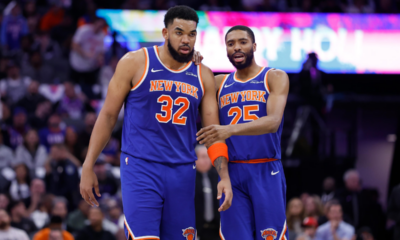
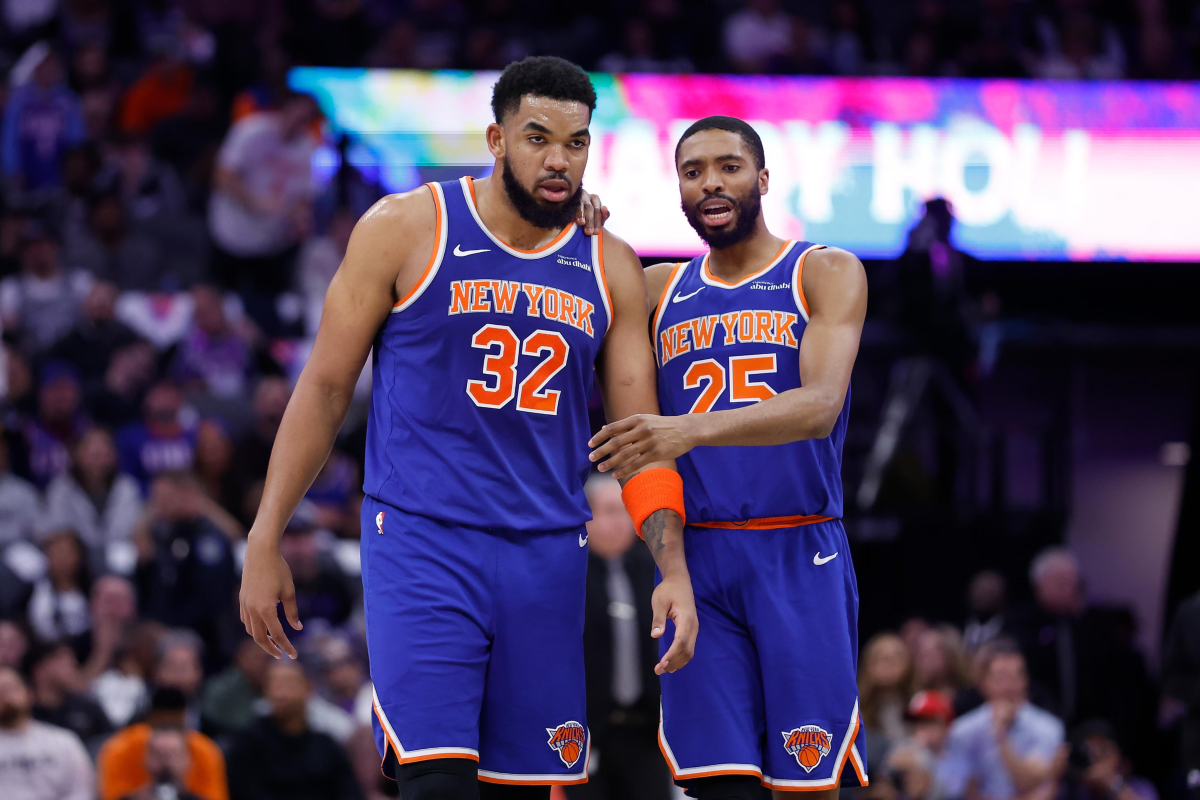
This is also where New York’s reserve unit could become decisive. Brunson, Karl-Anthony Towns, OG Anunoby and Mikal Bridges cannot be expected to absorb heavy workloads every night without consequences. The Knicks will need production from Josh Hart, Miles McBride, Andre Drummond and the rest of the bench to survive the trip without exhausting their stars.

The center rotation deserves particular attention. Mitchell Robinson’s departure removed an elite offensive rebounder and versatile defender from the championship roster. Towns and Drummond offer experience, but the Knicks are still searching for another big man. A condensed road schedule could expose that lack of depth, especially against physical frontcourts.

Every Opponent Will Treat the Knicks Like a Marquee Game

Winning a championship changes the atmosphere around a team. New York will no longer arrive as an ambitious challenger; it will be the opponent every arena wants to beat. Even games against teams outside the playoff picture could carry unusual intensity because defeating the reigning champions creates additional motivation and attention.

The second half of the trip should provide little relief. Golden State and Sacramento traditionally offer energetic home environments, while Portland could punish a tired team that approaches the matchup without sufficient concentration. The Knicks must avoid allowing one difficult loss to become a prolonged slide.

This stretch will not determine whether New York can win another championship. January results rarely provide definitive postseason answers, and every contender encounters periods of adversity. Still, the trip could influence the standings, expose weaknesses in the rotation and reveal how effectively the Knicks respond when fatigue begins to affect execution.

If New York returns home with a respectable record and its key players healthy, it will reinforce the belief that the roster possesses the maturity and depth required to defend its crown. If the trip produces losses, injuries or visible exhaustion, the front office may need to reassess the team before the trade deadline.

The Knicks earned the spotlight that follows a championship. Their New Year’s trip will show whether they are prepared to handle everything that comes with it.

Continue Reading

Knicks News

Knicks’ Third-Center Search Takes a Surprise Turn as Second-Apron Pressure Builds

Published

on

The Knicks could use non-guaranteed contracts and vacant two-way spots to find a third center while remaining below the NBA’s second tax apron.

The New York Knicks continue to evaluate potential solutions for the final spot in their center rotation, but their limited financial flexibility makes a straightforward signing increasingly unlikely. According to SNY’s Ian Begley, the defending champions have contacted several free-agent big men without committing guaranteed money to any of them.

That lack of urgency appears significant. If the Knicks believed one of the available veterans represented an obvious upgrade, an agreement would probably already have been reached. Instead, New York seems prepared to remain patient while monitoring the trade market and waiting to see whether an unexpected player becomes available.

Training-Camp Competition May Decide the Final Center Spot

Unless the Knicks complete a trade or a young target such as Moussa Cisse is waived, the most realistic outcome could involve inviting multiple centers to training camp on non-guaranteed contracts. Those players would compete for the opportunity to back up Karl-Anthony Towns and Andre Drummond during the 2026-27 season.

This approach would allow the front office to evaluate candidates in Mike Brown’s system before making a financial commitment. New York could compare their rim protection, rebounding, mobility and ability to defend the pick-and-roll while preserving the option to release them without creating a significant cap problem.

Even a veteran minimum contract, however, would carry consequences. Such a signing would produce an approximate $2.45 million cap charge and reduce the Knicks’ available room below the second apron to roughly $820,000. If the organization continues to treat that threshold as a hard spending limit, it would probably be unable to add a 15th standard-contract player until later in the regular season.

The front office must therefore decide whether securing another center immediately is worth operating with almost no margin for future injuries, trades or other unexpected opportunities.

Tyler Nickel and the Two-Way Slots Could Unlock a Solution

Tyler Nickel’s uncertain status adds another layer to New York’s roster calculations. The No. 47 pick remains unsigned and could receive a rookie minimum contract carrying an estimated $1.36 million cap hit. That option would preserve more space than signing a veteran center, although it would not directly address the lack of frontcourt depth.

A two-way agreement appears to be another possibility. Nickel could begin his professional career while developing between the NBA and G League, but reports have conflicted over whether the former Vanderbilt shooter will sign with the Knicks or use his newly granted eligibility to return to college for a fifth season. Choosing the NCAA route would effectively turn him into a domestic draft-and-stash prospect whose NBA rights remain with New York.

The Knicks are also the only NBA team with all three two-way positions still vacant. That unusual flexibility could become an important tool in the center search. New York could sign one or two young big men, develop them with Westchester and retain emergency depth without adding standard-contract salary below the second apron.

There is no perfect solution available. A guaranteed veteran would provide immediate security but consume most of the remaining financial cushion. A training-camp competition would preserve flexibility but offer less certainty, while two-way contracts would prioritize development over proven NBA production.

The Knicks have room to be selective, but their frontcourt remains one injury away from becoming dangerously thin. How they use their open roster places and three vacant two-way slots could determine whether the defending champions enter the season with adequate depth—or an avoidable weakness behind Towns and Drummond.

Continue Reading

Tendenza

Copyright © 2017 Zox News Theme. Theme by MVP Themes, powered by WordPress.